The Amazing Human Body – Joints

Like most aspects of anatomy and physiology, learning about joints helps us better appreciate the magnificent complexity in our human body.  And it certainly helps us better understand concepts such as movement, stability, range of motion, and importantly prepares us to take proper care of our precious joints. 

The point where one bone meets another (or articulates) is called a joint and as such, they form part of the skeletal system. 

Did You Know?  The study of joints is called anthrology. The study of bones is called osteology. The study of human motion is called kinesiology. 

As with all aspects of human anatomy and physiology, there’s some particular lingo involved, but the good news is that you have likely already heard many of these terms.  Here we will help you file them in your memory bank in the appropriate place!  

Ligaments: A connective tissue connecting bone to bone

Tendons: A connective tissue connecting bone to muscle

Cartilage: A soft gel-like protein padding between bones reducing friction and/or cushioning impact

Meniscus: A type of cartilage found in the knee

When you think of joints, you would be forgiven for assuming all joints relate to movement.  It’s not the complete picture, though certainly where our asana practice is concerned, we tend to focus on the joints that move, particularly those that may be most vulnerable to injury.   Movement is indeed one of the ways of we can classify joints, so let’s begin by looking at the classification of joints.

We can broadly classify joints in two ways:

  1. The structural classifications – here we look at what kind of materials the joint is made of, such as whether that which binds the bones together is fibrous tissue, cartilage or a fluid-filled joint cavity. 

  2. The functional classification – here we look at how much movement occurs in the joint, is it a lot, some or none at all. 

See Diagram 1 – Classification of Joints

Diagram 1: Classification of Joints

Give me some examples!

  • An example of a joint that doesn’t move at all are the suture joints in the skull.  Skull bones need to protect the brain so during childhood the bones knit firmly together with dense connective tissue to form a type of fibrous joint called a suture.   

  • An example of a joint that has a little movement are the cartilaginous discs between vertebrae in the spinal column.  The spinal column plays the crucial role in protecting our spinal cord – the main communication line between our brain and the rest of the body.  The little squishy pads between vertebrae absorb shock and allow us to have a degree of movement in multiple directions.  

  • Examples of a joints with plentiful movements include the elbow, shoulder, knee, and ankle. We’ll break these down a bit further below.

Did You Know?  The shoulder joint, with its vast range of movement, is recognised as the most mobile joint in the body.  The more flexible the joint, the less stable it is, so unsurprisingly, those joints with the most range of motion can be more prone to injury.

Before we delve a little deeper into the freely movable joints, lets refresh on some of the terminology used to describe movement.

Extension: Increasing the angle of a joint to its resting anatomical position, such as straightening the knees upon standing.

Flexion: Decreasing the angle of a joint such as bending the knee or bending at the elbow, or even bringing the chin closer to the chest.

Hyperextension: The extension of a limb beyond its usual limits. This can happen if we force our legs straight in a standing forward fold, meaning our knees are no longer in line with our ankles (rather our legs resemble a slight C-shape), or if we lock our elbows in a downward dog (again creating a slight bow-shape in the arms).  Some of us are born with hypermobility, while some of us develop it through improper stretching and repetition. Hyperextension puts undue pressure on joints and can result in damage, inflammation, and pain.

Abduction: Moving away from the body’s vertical midline, such as raising your arms out to shoulder height

Adduction: Moving towards the body’s vertical midline, such as lowering the arms next to the body, or squeezing the inner thighs together.

Rotation: An arc or circular movement, such as when we open the hips in tree pose, or roll our shoulders forward or back.

Dorsiflexion: Refers specifically to flexion at the ankle (less used in reference to wrists) where we ease our toes back towards our shin.

Plantarflexion: As above, primarily used in relation to the ankles, it refers to pointing our feet like a dancer.

Synovial joints are distinguished from other joints by the presence of a joint cavity between the articulating bones, called a synovial cavity, named for the synovial fluid that lubricates these joints.  All synovial joints are freely movable and fall into the diarthroses category, making them of special interest to us as yogis as we learn to respect and protect our body.

The bones at synovial joints are covered with a type of cartilage called hyaline cartilage, providing a nice slippery surface for bones to move against.  

Many of the components of synovial joints are avascular, meaning they do not receive a direct blood supply, but can receive nutrients to an extent through passive diffusion of molecules in the area.   We should be mindful that this means in general muscle can heal better and/or faster than joint structures.  Our yoga practice (and any physical movement) wants to always adhere to the guiding principle that prevention is always better.   Some connective tissue, once damaged, will never be as new.
Types of synovial joints

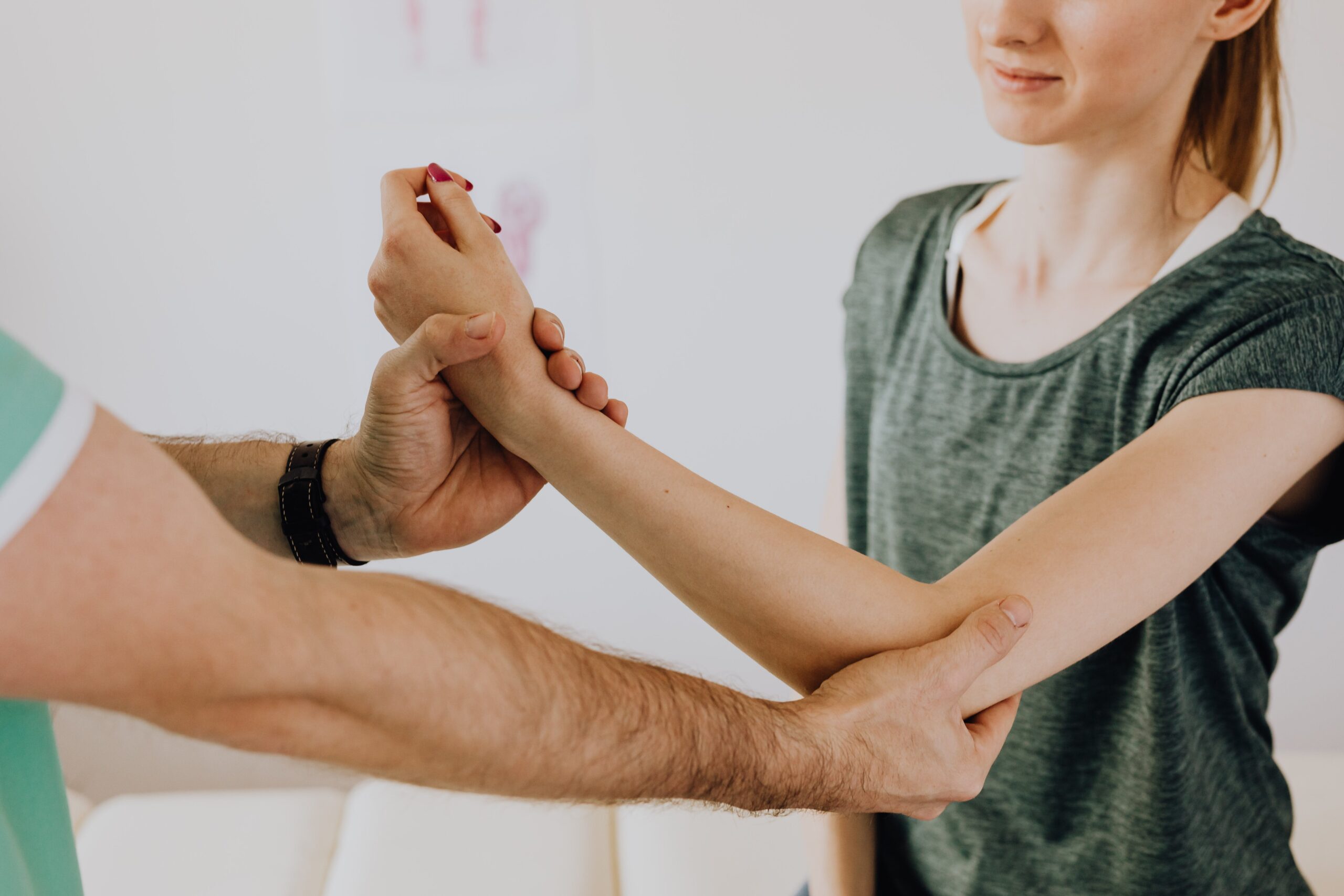
Not all synovial joints move the same way or to the same extent.

  1. Hinge Joint – allows movement back and forth (extension and flexion). Eg: Elbow bending and straightening

  2. Pivot Joint – allows a circular rotation/pivoting movement. Eg: the 2 bones in the forearm (radius and ulna) twist around allowing us to turn the palm of our hand upwards or downwards.

  3. Ellipsoid/Condyloid Joint – a joint with an ovoid shape, allows movement in multiple planes. Eg: the wrist joint between the radius in the arm and the carpals in the hand.

  4. Plane/Gliding Joint – bones meet in a flat plane. Eg: the intercarpals in the fingers.

  5. Ball & Socket Joint – where the end of one bone is conical, and the end of the other resembles a cup, allowing for multiaxial movement. Eg: in our hip where the femur bone in the leg meets the pelvis, and in our shoulder where the humerus bone in the arm meets the scapula bone of our shoulder.

  6. Saddle Joint – joints that interlock like opposing saddles,  allowing for multiaxial movement.  Eg: the joint at the base of your thumb.

To see pictures of the various joints, click here

Did You Know? The popping sound that joints sometimes make is the gases present in the synovial fluid (such as oxygen, nitrogen and carbon dioxide) being released when a joint capsule is stretched.   Medical consensus states that it’s not necessarily something that puts us ant any risk.   However, if it is coupled with any pain or swelling, we should consult a healthcare professional. 

The word arthritis comes from the Greek: joint =  arthron, and itis = inflammation, and refers to where the protective tissues at the points where bones meet, deteriorates, resulting in pain and stiffness.   The most common form of arthritis, osteoarthritis can affect any joint, but very commonly affects hands, knees, hips, toes and lower back. 

It can be triggered by a sudden injury and can worsen over time without proper management to prevent further deterioration of the cartilage. 

Range of motion exercises can help ease the stiffness out of joints, while strengthening and balancing exercises can help build muscles in the surrounding areas to provide greater stability and take some of the strain off joints.   It’s best to seek professional guidance for exercise suggestions so we don’t inadvertently cause further wear and tear on cartilage.

Generally, joints follow the use-it-or-lose-it principle, and love movement.   Key is paying attention to the sensations in our body and not ignoring the wisdom of our body when it says, “that’s far enough”, and working with an experienced yoga teacher or therapist that can help us move into postures where the load is evenly distributed and avoids hypermobility.   

If conditions such as injury or arthritis are present, a qualified yoga therapist can guide us to movements and postures that provide support to joints, while respecting and protecting the cartilage, ligaments and tendons.

Written by Nicole Small, The Yoga Institute

Learn More:


Keen to become a yoga teacher? Our 500-hour Yoga Teacher Training course includes important foundational knowledge of anatomy and physiology.

Not ready to think about teacher training? Our 150-hour Yoga Studies course includes an anatomy component, allowing you to deepen your knowledge of how your body can move safely in yoga.  

Yoga Therapy Graduate Story – Catherine Sherlock

Written by guest author and graduate of the 650-hour Yoga Therapy Training Course, Catherine Sherlock

We become many things in life. Some just happen. Some we follow arduous routes to achieve, only to find they don’t feel as comfortable as we thought they would. Others are like a home coming. Becoming a yoga therapist feels just like that for me. An arrival. The completion of a lifelong pursuit to fulfil my personal mission. A true expression of my essence. My calling.

I am passionate about honouring the worth of all life. I believe that our life challenges are always our opportunities. I believe that everyone matters and that we’re all ok. Serving the relief of suffering in its many and varied forms in whatever way I can is my dedication. I have discovered through yoga therapy training that the system of yoga offers so much to this approach. So much that our mainstream approaches to healing don’t always offer. Not necessarily as a replacement. Sometimes, as an accompaniment to walk alongside mainstream approaches. Other times as a stand-alone intervention when that is the best response.

After a 30 year career, true to the ‘householder’ stage of life (i.e. driven by the need to put food on the table, establish myself in the world and gather ‘stuff’) I realised that I had progressed quite well up the ladder, only to recognise that the ladder was leaning on the wrong wall! I just couldn’t satisfy my sense of purpose in all the career pursuits that I’d made. This was despite studies in humanities and a long held desire to ‘make a difference’. I quit my ‘real job’ and decided to make my passion for yoga the centre of my life.

I’d already been teaching for five years. However, I was becoming more and more dismayed by the way yoga had been co-opted by Western culture. Yoga meant more to me than achieving fancy postures and wearing colourful lycra. Don’t get me wrong, I did love both these things, but I knew there was more to it. I wanted the real deal.

I discovered The Yoga Institute via the reputation of its founder and director Dr Michael de Manincor. I had heard in many circles about the work he was doing with yoga and mental health. I remember feeling really confirmed in the first interview that I had with him to be considered for the course. The direction I was beginning to take in my teaching was aligned with what The Yoga Institute was offering. It made sense for me to pursue yoga therapy as a fuller embrace of the system of yoga if I were to make it my career.

I commenced the Graduate Yoga Therapy Training in June 2018. As I look back some three years later, I see that I’ve taken a transformational journey to understand and adopt yoga as a wholistic approach to health, wellness and healing. This has required a degree of ‘unlearning’ and a substantial expansion of the foundational understanding that I originally brought to these studies.

Now, after reaching the finish line, I can see in front of me an exciting array of paths to follow as I contribute this knowledge and understanding to the world. The first challenge, and one that I am now well equipped to meet, is to educate people about what yoga therapy offers. Sadly, our culture has an understanding of a yoga teacher as someone who stands in front of a group of people and directs them through making a series of shapes with their bodies. That is no longer what I do (not all the time anyway).

True yoga offers so much more. A wholistic approach encompassing not just movement but breath, meditation and philosophy. I am excited about the vast array of tools that are now at my disposal. But, most importantly, an understanding that yoga is about wholeness – not perfection, not bliss, it isn’t an achievement. Rather, it is something to be recognised. Something that we all already have. Yoga is about coming home to what is natural within us and that is never, and can never be, disturbed by the surface complications of our lives.

I am so grateful for the traditional training that I have received at The Yoga Institute. I now feel well equipped to serve my mission in the world. That I have a map to help others find their way, and to share their journey of home coming.

Leare More:

Our 650-hour Yoga Therapy Training (for qualified yoga teachers)

Contact Catherine at Yoga From The Inside

Tell Us Your Story

We’d love to hear your story and be able to share it with our community of practising and aspiring Yoga Teachers and Yoga Therapists.

Tell Us Your Yoga Teaching Story

It’s incredibly inspiring for us and for everyone in our community to hear about the amazing work our graduates are doing as Yoga Teachers and Yoga Therapists  

So often we think we need to know more, do more or be more to be able to take the next step and to further our exploration of Yoga and its transformational potential.

There will always be something in your story that will resonate strongly with someone else and perhaps be exactly what they need to hear to inspire and help them to step forward with more confidence or sense of purpose.


Put your hand up to be an inspiration for someone else

(even if you don’t see yourself as inspiring!):

To share your story you can write it down and email it through or we can organise a phone or Zoom call where you can tell about your experiences and we’ll write it up for you. You will of course have the opportunity to review before anything will be published.

Email us at reception@yogainstitute.com.au or call us on 0477 021 219

We’d love to hear from you!

Posture in Focus: Bridge Pose

Let’s comprehensively unpack the features of Bridge Pose to enjoy its full benefits in safety.  

Also known as

Dvipada Pitham (‘Dvi’ = Two, ‘Pada’ = Feet, ‘Pitham’ = Stool, seat )
Setu Bandhasana (‘Setu’  =  Bridge, ‘Bandha’ = Bound)

The terms are largely interchangeable.  Dvipada Pitham is more commonly used in reference to the dynamic version, coming in and out of the pose on inhalation and exhalation, while Setu Bandhasana may be more commonly used in reference to holding the posture.   

It’s widely understood by students as simply Bridge Pose or Two-Feet/Leg Desk Pose.

Classification

Purvatana (backbends)

Benefits & Effects

Bridge can be both strengthening and restorative, as it is building strength in the back of the body (back, glutes and hamstrings), while its mild inversionary effect calms the nervous system and can aid mood balancing, helpful for stress, anxiety and depression.   

It stretches the front of the body, opening the heart and stimulating the abdominal organs (aiding digestion), lungs and thyroid, and brings warmth and energy to cold days when you might feel a bit flat.

Vinyasa krama, breath and drishti    (How To…)
One of the classical ways to enter the posture is this:

  1. Lie on back, with legs together, palms on the floor alongside the body, chin down, eyes closed (inner gaze towards area between eyebrows).
  2. Bend the knees, placing the feet together close to the buttocks, and hold the ankles. Knees together.
  3. While inhaling, raise the hips (tiling the pelvis, lengthening the tailbone and applying your Mula Bandha, contracting your pelvic floor muscles).
  4. While exhaling, lower the hips the floor (rolling down the vertebrae, release your bandha).
  5. Release ankles and extend legs.

Alignment and things to watch for

  • Knees may fall out to the sides.  Engage your inner thighs to keep them symmetrical. Some people like to squeeze a block between the knees
  • Toes may point outwards, check for symmetry. 
  • Shoulders and neck may lift off the ground, take a moment to ensure shoulders are flat on the floor and back of the neck is long.
  • Hips and chest should lift high, watch for drooping hips.
  • Pulling the shoulder blades together helps facilitate the lift.
  • Effort without a sense ease may result in holding your breath!  Let breath be your guide.  

Preparation and Counterposes

Bridge is commonly used in preparation for other poses, which is why it is frequently found as part of a warm-up or cool-down sequence.  In a warm-up, the Downward Dogs and gentle Baby Cobra lifts in a warming Sun Salutation can be helpful.

Bridge may assist you prepare for poses such as Supported Shoulderstand or Wheel (not suitable for beginners).  It also acts a nice counterpose after Plough. 

To counterpose Bridge pose itself, you may like to hug the knees into the chest, take Reclining Butterfly or some reclining spinal twists. 

Modifications and Adaptations

Take it down a notch by:

  • Placing a blanket under the shoulders
  • After lifting hips, slide a block or bolster under the base of the spine to let your weight rest in a Supported Bridge.

Take it up a notch and experiment by:

  • Lift the heels off the floor
  • Lift one leg straight up towards the ceiling, ensuring hips do not drop
  • Clasp your hands together under the back and draw the shoulder blades close together, aiding the chest to lift higher
  • Advanced practitioners can bring the feet and legs together and extend the legs out straight, bringing hands to the hips for support

Contraindications

People with neck or shoulder injury are best advised to practise under the supervision of an experienced teacher or yoga therapist.

Written by Nicole Small, The Yoga Institute

Learn more about:

The Amazing Human Body: Blood

Did You Know? About 7-8% of your body weight is blood?  Let’s marvel at this incredible river of connective tissue

Revered for millennia for its life-giving role, romanticised and dramatized in literature and entertainment  – the word blood appears in every single Shakespeare play –  alarming for many, stomach-churning for some, there’s no doubt blood holds a fascination for humans. We seem to instinctively know at a very young age how important this fluid is.

Blood is actually a type of connective tissue, a connective tissue that can travel!    Blood’s main job is to do just that: to deliver oxygen to lungs and tissues, and to take waste products like carbon dioxide away, but it also delivers chemicals such as hormones and enzymes, helps regulate body temperature, and fights infection.

Did You Know? A little over half of what we collectively call ‘blood’ is plasma (a soupy mix of water, proteins, nutrients, electrolytes, hormones and gases), while almost all the rest is made up of red blood cells, with white blood cells and platelets occupying a tiny but important 1% of blood’s volume.  Each ingredient in blood is busy performing different functions.

Red blood cells (RBCs) are in charge of the delivery of oxygen and nutrients, and the collection of waste products. Indeed, they are the only type of blood cell capable of transporting oxygen.

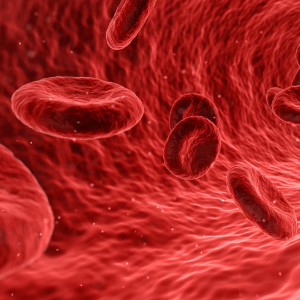
The colour of blood is derived from the hemoglobin in red blood cells.  ‘Heme’ refers to the iron-containing molecule therein, while ‘globins’ are little chains of protein.  A healthy red blood cell is shaped somewhat like a pizza, a disc shape with a sunken centre through which oxygen and carbon dioxide can diffuse. 

Red blood cells will circulate the body for about 2 months before they are broken down by our little cleaning scavenger cells called phagocytes.  From the rise of new blood cells, a complex feedback loop ensues, involving messages from one area to another about the rise and fall of elements such as oxygen and the dispatch of chemical instructions to produce new blood cells and breakdown old ones, keeping the body chugging away in its preferred homeostatic balance. 

Did Your Know? Most of your blood began its existence in your bone marrow!    All blood cells begin life as stem cells, a type of cell ‘starter kit’ that can give rise to several specific types of cells.  Lymphocytes (a type of white blood cell involved with immunity) are formed in lymphatic tissue, but a whopping 95% of your blood has its origin deep within your bones.   

White blood cells are associated with immunity.  They are like little soldiers, travelling around your body looking for foreign invaders like bacteria, viruses, and fungi.  Our white blood cell count can be lowered by certain medications like antibiotics, illnesses, overwhelming infection, or when the body is simply not producing enough, and it is thought nutrients like adequate vitamin-C help us maintain white blood cell production. 

Did You Know?  Australian scientists in Melbourne were able to film a white blood cell dying, where it radiated molecules into neighbouring cells. It is thought that the white blood cell may be capable of trying to warn other white blood cells about the presence of an attacking pathogen!

Plasma’s key role is to accept the collected waste and take it to organs like the kidneys and liver for excretion, but it is also busy helping regulate body temperature, maintaining fluid pressure in the blood, and helping with immune function. 

Image source: Encyclopaedia Britannica

Did You Know? There are 8 main blood types, Type O being the most common and known as the ‘universal donor’ as it can be given to anyone.  Blood types are determined by the genetically-determined presence of certain sugars and proteins on the surface of the cells, known as ‘antigens’.  If the wrong type is introduced during a blood transfusion, our body interprets it as an invader and goes into fight mode.  But, as blood is produced in bone marrow, if we receive a bone marrow transplant from someone with a different blood type, it can eventually change our blood type!

We often talk about blood “flowing through our veins”, but that really only refers to blood that has already collected its waste products and is headed back towards the heart to be ‘cleaned’.   Freshly oxygenated blood leaves the heart and travels in arteries, while capillaries are tiny, tiny, tiny blood vessels that form the junction between veins and arteries. Capillaries are the business end of nutrient, gas and waste exchange!

Did You Know? The average adult has about 5 litres of blood in them, and it zips around your body so fast that in one day your blood will traverse almost 20,000 kilometres – that’s across Australia about 5 times in a single day!

Pause for gratitude

Have you thanked your amazing body yet today for the amazing work is it doing for you every second of every day, to keep you alive, in balance and well?    Place your hands over your heartspace and give your body some gratitude.


Written by Nicole Small, The Yoga Institute 

How can we support you:

Join our community here

Thriving in Winter

More tired, sluggish and unmotivated in winter? How to keep your mojo in the cold

Some people prefer the winter months, but for many there’s a tendency to feel a bit blah.   Here are some holistic tips –  inspired from both ancient and modern paradigms –  to help you feel more vibrant when Old Man Winter doesn’t seem like your friend.

1. Here comes the sun, little darlin’ 🎶
We all have a ‘master clock’ in our hypothalamus, but signals coming into the body’s senses and being processed for interpretation, can influence our inner-clock, and this includes artificial light.   Just as it’s important to lower lights and stay off blue-screens to let prepare the body for sleep, a dose of light in the morning can signal to your body that it’s time to stop producing the sleep hormone melatonin and give you a gentle increase in cortisol to give you the rajas  – that quality that drives movement and activity – to get up and start your day. 

If you’re waking up in the dark, stumbling about, try a blast of sunlight immediately upon waking, or explore ‘sunrise lamps’, which gradually lighten to simulate sunrise.   Even with closed eyes, your clever retinas can detect the oncoming presence of light.

Of an evening, have fun starting to switch off your main big lights, and enjoy some candles or fairy lights as you prepare for sleep. 

2. Practice simple contentment
Humans may not literally hibernate in the cold months like some of our mammal cousins, but it is a great opportunity to slow down and practice not over-scheduling ourselves. Lean in to the contractile nature of Winter, learning to give your senses a reprieve from constant over-stimulation and rushing.  Modern life has us so wired to try and do more, more, more. Buck the unhealthy trend and follow the wisdom of Mother Nature, time to do less and rest.

Lockdowns may heighten this, so use it as an opportunity to enjoy what the Scandinavians refer to as Hygge, enjoying simple pleasures  – often at home but may also include time in nature – that bring contentment and allow the nervous system to rest and reset.  No, phone scrolling and TV don’t count as this will wind your nervous system up!  Instead, try enjoying a book, baking or making Chai from scratch, drawing, colouring-in or painting, walking in nature, taking a bath, making a bird-feeder or other craft activities, giving yourself an oil foot massage, and chatting with household members over a warm drink without any other distractions. Practice listening without judgement about what is going on for them. 

Self-care activities that fill your cup, that replenish your energies, help you feel soothed, calm or make your heart sing, can actually all be regarded as part of your yoga practice.

If it fills your cup up, it’s self care, and if it’s self-care, you can think of it as part of your yoga practice.

You can listen to our founder and director Michael de Manincor here as he talks about the expansive definition of yoga and how he increasingly refers to his “self-care practice” instead of his “yoga practice”.  

3. Eat for vitality
Winter can make us want to reach for more refined food and other dubious choices, but this can actually spiral us further into a sluggish cycle.   As in any season, it is beneficial to:
 – Choose towards foods in their most natural and whole state, where they retain the most life force,
 – Choose towards foods that are naturally plentiful in that season, keeping us in harmony with nature, and
 – Diversify with a colourful plate. If you fall into narrow ruts, even ‘healthy’ ones, you might put yourself more at risk of a nutrient insufficiency.

A diverse diet, revolving around a rainbow of plants, will mean a happy gut microbiome, important for winter immunity (not to mention mood, weight management, and protection against a host of modern life’s preventable chronic conditions)

When our bodies are working in harmony with nature, they will ‘crave’ things that help us maintain balance: Just as a hearty bowl of stew is not appetising in the heat of Summer, our pull towards such foods in Winter is our body’s way of helping us get the nourishment to keep us in balance.

Eating seasonally is also a great way to diversify your nutrient intake, keep food interesting, and it means food hasn’t had to travel as far, helping you save money and decrease your carbon footprint.  

See which foods are in season in your part of Australia

Through a more western nutritional lens, Winter can deplete vitamin D, important for immunity, bone density, mood, brain and nervous system health, and gene expression. Our bodies can make vitamin D through safe sun-exposure, but in the absence of sunshine, foods like fatty fish, eggs, dairy and vitamin D-fortified foods can offer a reasonable contribution.

4. Move that body!
Physical activity in the colder months is important for physical and mental health.  Apart from being beneficial for cardiovascular health, lung capacity and general muscle and bone maintenance, it is associated with improved sleep, mood regulation, self-esteem, fatigue-reduction and release of tension and stress.

Taking at least some of your physical activity outdoors has the additional benefits of fresh air and connection to nature.  But wait, aren’t the cold months precisely when motivation tends to decrease?    See our post on maintaining physical activity and asana practice in the winter months for helpful tips.


5. You can be yogic doing more things that you realise
Yoga is a lifestyle, not a mat-anchored activity.  If you approach any activity with elements such as presence, curiosity, and non-judgement, even things like folding your laundry and cleaning your shower can all be done with a yogic mindset.

Why do we want to cultivate a yogic mindset scrubbing our bathroom? Because while yoga on the mat can make you feel great, it’s true purpose is not simply to make you feel a short-term relief or ‘escape’ from day-to-day life, and then revert to our habitual patterns that cause us suffering.  It’s about changing our capacity as human beings, changing the way our mind works. And if winter affects your mood, why wait until you are on your mat to do transformational work?

Life is so often about noticing how your mind flips between trying to avoid the activities and feelings we don’t like, and seeking more, more, more of the activities and feelings that we do like.   Attempting to race though chores as fast as possible just reinforces the mind’s habit to try and avoid unpleasant sensations.   Chores may not fill your cup back up, but they can provide a very useful practice for our flighty mind.  Remember, nothing is good nor bad, but thinking makes it so.


6. Practice gratitude
Gratitude can’t easily co-exist with emotions such as anger, resentment, a sense of lack, or even anxiety and depression.   Neuroscience backs up gratitude as an evidence -based practice offering physical and psychosocial benefits.   Make a game, can you find things you like about the cold seasons?  Your favourite scarf? The beautiful red and orange leaves?  Your favourite soup?  The laughter you get watching your fur babies hog the best spot in front of the fireplace or heater? The sensation of snuggly flannel sheets? How quiet a city becomes on a winter evening?  

You can try journaling, writing thank-you letters, verbalising your appreciation to others, and looking in the mirror to acknowledge something you like about yourself.   Gratitude has benefits for every single person, but if you are feeling a bit out of sorts in colder months, it may help you recalibrate towards a greater sense of wellbeing.    

DISCLAIMER: This information is for general educational purpose only and does not constitute any kind of lifestyle or nutritional advice, which can only be provided when a qualified health practitioner understands you and your individual circumstances.  Further, if low mood is affecting your ability to function or sleep, please consult your primary health care practitioner.    Help is available.  


Join our community here – choose the newsletters of most interest to you

Written by Nicole Small, The Yoga Institute 


Maintaining physical activity and asana practice in cold months

It’s cold out and the doona is snuggly and warm….. What do you do?

We know that physical activity in the colder months is important for physical and mental health.  Apart from being beneficial for cardiovascular health, lung capacity and general muscle and bone maintenance, it is associated with improved sleep, mood regulation, self-esteem, fatigue-reduction and release of tension and stress.   But just because our logical brain knows it’s good for us doesn’t always mean our motivation follows suit.   What can we do?

Here are some ideas to approach staying active this winter:

  1. Get the basics right.  
    Particularly if you are heading outdoors – which is a great way to get much-needed fresh air and nature  –  your clothing choices should protect you from cold, rain and wind. 

    Base layers of cotton can trap sweat against the skin, making you colder, while wool and synthetics are ‘moisture-wickers’ that keep you drier.  Complete the insulation force field with an outer layer that repels moisture and wind such as nylon or Gore-Tex. 

    Don’t neglect hands, neck, scalp and ears.  You can even look for gloves with a touch-screen capability. 

    For indoors activity like asana practice, opt for layers that can come off easily and importantly, go back over you easily as you start to cool down before savasana. The aim is to be able to re-layer up without disturbing your practice too much by say, wrestling with zips and buttons.  Cardigans, shawls and blankets are good options.  


  2. Discipline is a wonderful muscle to strengthen.
    This is tapas in Patanjali’s niyamas, stoking our inner fire and self-mastery, but it need not be associated with severe sombreness or a sense of forcing. Indeed, it may be as simple as just prioritising yourself high enough to take a walk each day, or to come to your mat for a few minutes each day, to move, stretch and then relish a quiet space to sit with yourself and observe what arises. In this way, you are actually sending your body a clear message of love and care, reinforcing to yourself that you are worthy of making time for self-care.


  3. Find physical activity that lights you up.
    Research indicates that activity motivated by enjoyment and/or sense of accomplishment may be easier to stick to than relying on discipline alone, so find a form of physical activity that gives you pleasure or a sense of achievement, not simply one that ticks all the boxes for physical conditioning.

    If you’ve never had your very own daggy disco dance party in your own bedroom, it is a super-fun way to quickly elevate body temperature and mood and improve circulation!

    When it comes to your asana practice, recall how good you know you feel when you’ve done your practice. Summoning that memory is an example of choosing your thoughts, and as that memory stirs emotions, every cell in your body will respond to that emotion, helping you let go of resistance.  


  4. Shift ‘decisions’ to become ‘habits’.
    Relying on willpower and discipline can work well when you have the internal resources at hand (ie: your cup is full), but it may be more challenging when you’re feeling depleted and flat. Decisions and habitual actions take place in different parts of our brain. Making decisions uses up a lot more energy and resources, so our brain likes using habits to direct behaviour.  We can turn this to our favour! 

    Author of the book The Power of Habit, Charles Duhigg, says for something to become a habit we need a cue, an action and an immediate reward.    A cue gives the brain an association to anchor to.  It might be what you do right before (such as lighting a candle or speaking an intention, prayer or chant).  It might be a specific time, a place, specific people and so on. 

    The reward can be something of our choosing (such as coffee with a friend, or hot breakfast), or simply the endorphins and feelgood factor that organically follows.  Duhigg says it needs to be an immediate reward because while the logical part of our brain understands long-term benefits, our perfectly flawed human organism needs an immediate reward or some sort of immediate payoff, for an action to become a habit.

    You can use a combination of these cues and rewards, and then with repetition of the same ones over time, the neural pathways deepen, and we move from deciding to do our practice, to letting it simply be a habit.


  5. Group energy can be motivating
    Being amongst a group can help you feel increased accountability and provide a sense of community. If we can’t physically be with other people, a livestream class may be more enjoyable than a static recording.  


  6. Track your progress
    Some people report increased motivation by progress tracking, enhancing the sense of accomplishment. Your phone, apps and watch can all be recruited to offer you stats around your commitment.   Did more steps this week? Self high-five! 


  7. Re-think the word ‘exercise’.  
    Did you know setting intentions to your household chores or any work activity can be beneficial?   A study showed that hotel housekeeping staff that were taught how to put intentions around what they had previously thought of as incidental activity or activity that didn’t count towards physical activity, showed greater improvement in heart health markers and weight management, than those who continued to see their work and chores as ‘not counting’ towards physical activity.


  8. Break desk-sitting
    If a work-intensive day has you at your desk for long periods on any given day, let go of the all-or-nothing mindset that leads you to believe you need to set aside an hour of your day to do any kind of asana practice.

    Remember that asana’s purpose is to release tension and tightness and to move blocked energy so that we may more comfortably sit in our favourite meditative postures. But the kind of comfortable-sitting we are working towards with our asana practice is very different to the tendencies we display in desk-sitting, often hunched and progressively trapping more tightness, and exacerbated by stressful thoughts.

    Often described as “the new smoking”, desk-sitting habits can benefit enormously from some simple movements that don’t take very much time to counter desk-posture, and can be spliced into your work day. And if you’re working from home, there’s even more more freedom – nobody’s looking – so get up and wiggle those hips, shake those limbs, have some fun!

    Start with a few deep, slow cleansing breaths and try some easy postures and stretches to break desk-sitting:
    – Gentle neck rolls
    – Seated Cat and Cow spinal movement
    – Wrist and finger stretches
    – Seated side stretch and spinal twists
    – Seated cobra backbend with arms wide
    – Sit-and-stand repetitions
    – High squat hip opener
    – Seated forward fold

    Enjoy a 6-minute Yoga With Tim desk break


  9. Try warming aromas
    Certain aromas have a warming effect, such as cinnamon, vanilla and frankincense.  Put your candle on double duty, so while it acts as a ritual to anchor your action to a habit, it also gives off a delicious and warming fragrance.   


  10. Practice self-compassion and stop wasting energy on guilt
    If it didn’t happen today, we can practice being ok with that.  Some people mistake self-compassion for giving up any kind of effort or discipline, or shunning accountability.  But self-compassion expert and author of the book, Self Compassion: The Proven Power of being Kind To Oneself, Dr Kristen Neff, says this is not the case.  

    Dr Neff clarifies that self-compassion acknowledges that we are all limited and imperfect beings.  We can take responsibility for slothing on the couch glued to Netflix when we’d planned to be active, without punishing ourselves for it with negative self-talk.   If we were perfect, we wouldn’t be human.  

    As another cherished author, Louise Hay, puts it, “You have been criticising yourself for years and it hasn’t worked! Try approving yourself and see what happens”. 

You got this, go you good thing! 

Written by Nicole Small, The Yoga Institute 

Film Review: The Wisdom of Trauma

Written by Yoga Institute faculty member, Mischa Telford

Although I grew up in a loving family, adverse early childhood experiences left me with complex PTSD and a highly dysregulated nervous system, which was over-reactive to sensory stimulation of any kind. This made social situations quite complex to navigate, particularly in the emotional terrain of relationships. Whilst I discovered yoga in my late teens, many of my early yoga experiences unintentionally further increased my emotional instability, rather than developing my capacity for self-regulation and resilience. In part, this was due to the environmental context where I chose to attend classes at the time – which unconsciously appealed to me as there were aspects which resonated with my earlier traumatic experience.

Thankfully, some years later, my healing journey led me to doing a yoga teacher training, and subsequently to become a certified Yoga Therapist in the much more person – centred Krishnamacharya lineage. In this tradition, I have had the immense good fortune to have studied with experienced teachers Karen Schaefer, Mark Breadner, Michael de Manincor, and Saraswathi Vasudevan, who have all treated me with open hearted compassion and respect. Along the way, I studied Gestalt Psychotherapy, and began to be interested in how individuals can heal from trauma, which helped me enormously when I was diagnosed with cancer in 2017.

In recent times, Bessel van der Kolk “The Wisdom of the Body”, along with others, have greatly supported the field of yoga through modern scientific validation of some of the psychological, neurological and & physiological effects that yoga practice can produce, adding to the classical wisdom yogis have been exploring for centuries.

The Work of Gabor Maté

One person who has been working in the field of trauma extensively for many years, is Gabor Maté, who as a retired medical doctor, began his work in the field of trauma with a community of severely traumatised individuals who were addicted to substance abuse of various illegal drugs.

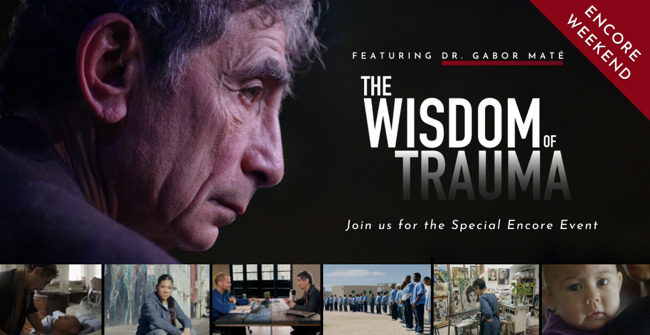
 “The Wisdom of Trauma”, released in June 2021, gives a brief introduction to Gabor Maté’s approach to working with traumatised individuals, which is based on Compassionate Inquiry, a person-centred approach which offers people a chance to be listened to, without judgement, & with acceptance of them as they are.

How It Relates To Yoga

I find this approach resonates so beautifully with the compassionate approach Patanjali describes in Yoga Sutra 1:33, and which forms the basis of our work as Yoga Therapists.

maitri karunā mudita upeksānām sukhaduhkha punyāpunya visayānām bhāvanātah cittaprasādanam –

“By cultivating an attitude of friendship toward those who are happy, compassion toward those in distress, joy toward those who are virtuous, and equanimity toward those who are non- virtuous, lucidity arises in the mind.”

I highly recommend any yoga therapist who is interested in working in the field of trauma, to watch this movie.

View trailer here

More details on how to watch the movie here

Selected quotes from “The Wisdom of Trauma” – Gabor Maté

“When I see human faces, I see beauty, tremendous suffering, and I see enormous potential for transcendence.”

“Our job as human beings, is to learn from our suffering.”

“Working through trauma can reveal the beauty of our existence – that we had lost sight of.”

“The common template for virtually all addictions is in fact, trauma.”

“There is a wisdom in trauma – when we realise that our traumatic responses and imprints are not ourselves, and we can work them through and thus become ourselves.”

“Trauma is what happens inside you as a result of what happened to you.”

“Trauma really means a disconnection from ourselves – why do we disconnect? Because it is too painful to be ourselves. I no longer know how to deal with emotions in relationships – I withdraw so I don’t have to feel those (painful) emotions. It also means if I have gut feelings, I don’t follow them, so I create situations of risk for myself.”

“Adverse Childhood Experiences does not give the child a safe, predictable environment, so their nervous system is constantly on high alert. How we respond, react to stress affects development of the mid frontal cortex, which is responsible for higher executive functions of the brain.”

“If parents are alienated from their own gut feelings, they cannot respond appropriately.

Children get traumatised because they are alone with their hurt.”

“Our two fundamental needs as children are: attachment and authenticity – a connection to ourselves.”

“Addiction is any behaviour that a person finds relief from in the short term and craves, but suffers negative consequences from, and cannot give up.”

“When people are suffering, they want to escape their suffering – it is normal.”

“Meeting people where they are at and treating people like human beings, and not trying to change them – actually opens up the possibility of transformation for them.”

“Are we free/ Are we conscious? Am I making decisions based on full awareness, or am I driven by unconscious dynamics that I inherited or developed in response to (my life experience)?

In so far as we are not conscious, we are not free!”

“The modern medical paradigm separates the mind from the body and the individual from the environment.”

 When illness comes along, we can ask ourselves: What does this (tell me) about my life, about my relationships, particularly, what is this telling me about how I treat myself – what is the teaching?”

“We can only heal when we answer the 3 fundamental questions: Why this disease? Why this person? Why now?”

“Psychedelics get the conditioned mind out of the way. In an appropriate, compassionate, safe context, individuals can experience these mind states without having to be driven to insanity/ or having to escape.”

“We don’t respond to what happens – we respond to our perception of what happens: it is in our minds that we create the world. We don’t respond to the present – we respond to the past – when we see the source (of our suffering) as ourselves, it can be liberating.”

 “When we start the journey of being compassionate with ourselves, not only does it change us individually, it changes our communities.”

“Every human being has a true, genuine, authentic self – and the true, genuine authentic self can never be destroyed.”

“As we heal, that same energy (that we use to push away the pain of our suffering) is liberated for being alive, for being present.”

Other Resources

There is a series of discussions linked to the movie – this one with Stephen Porges, who developed Poly Vagal Theory, is of particular relevance for Yoga Therapists with regard to how vagal tone helps self – regulation.

“Our underlying emotional state shifts our perspective of the world.” Stephen Porges

Learn More About:

Science Corner: Yoga and Brainwave Coherence

A new systematic review has synthesised the findings of dozens of recent studies into yoga’s effect on neurological activity, bringing more weight to the idea that yoga improves brainwave activity and offers people better cognitive function.

The study found that integrated yogic interventions (including pranayama and meditation) can increase the grey matter in the frontal and temporal lobes (the areas of the brain associated with motor control, speech & problem-solving, and hearing & memory recall respectively), and that it can even restore certain brain functions previously impaired.  Yoga can activate areas of the brain that have been dormant, downgrading unhelpful memories and upgrading useful ones.

Whoa, read that last sentence again yogis!  Yoga can downgrade unhelpful memories and upgrade useful ones.  Anyone else just shiver?

Much of this neurological improvement appears to be from greater brain wave coherence.  Brain waves just refers to your brain’s electrical activity as cells communicate with one another and will vary according to stimuli and what we are doing (such as resting versus problem-solving).  A well-functioning brain will see nerve cells synchronise electrical messages in an identifiable rhythm, with certain brainwaves more helpful in certain circumstances, depending on what we are doing.

In short, it all points to integrated yoga’s ability to increase mental resilience, slow the decline of brain function, and give us better neuropsychological function.

De. A and Mondal, S. (2020). Yoga and brain wave coherence: A systematic review for brain function improvement. Heart Mind 4(2), 33-39.

Written by Nicole Small, The Yoga Institute 

Learn More About:

International Day of Yoga – 21st June

Since 2015, the 21st of June each year is recognised as International Day of Yoga under the auspices of the United Nations (UN).

It took less than 3 months from the time the Indian government proposed the idea, to the idea being formally adopted, with 175 member nations joining as co-sponsors of the proposal. It was the first time such a proposal had been floated and implemented in under 90 days.

Yoga’s international acknowledgment under UN recognition correlates with yoga’s increasing prevalence and acceptance as a healing modality, and its integration into more mainstream healthcare.


Why do we celebrate yoga?

The Indian government pointed to yoga’s holistic approach to health and wellbeing as valuable for the world population’s health, a point reinforced by then UN Secretary General Ban Ki-Moon, who spoke of yoga’s contribution to bolstering immunity and providing resilience to both communicable diseases as well as non-communicable diseases including epidemic killers (such as cardiovascular disease, diabetes and cancer).

The Indian government also articulated the impact yoga could have on the sustainability of the planet as a whole. Bringing mind and body together, thought and action, yoga’s ability to help humanity live in greater harmony with nature can also help us deal with issues such as climate change and biodiversity loss.

The 21st of June is about raising awareness of the benefits of yoga – both those already evidenced, and those as yet unrealised if more people did yoga – and offering gratitude that this ancient practice is being embraced and enjoyed by more and more people all over the world. The need for heart-mind and thought-action coherence has also never been more important.


The theme for 2021 – Yoga for Wellbeing

Amidst the ongoing effects of the pandemic, it is not simply physical health where the need for strengthening and resilience can be seen. Indeed, the pandemic has exacerbated and increased the suffering from psychological and mental health problems. Yoga is proving a powerful tool in the psycho-social care and rehabilitation of Covid patients, and is helping untold numbers of people better manage anxiety and worry.

This aligns with the therapeutic and restorative power of yoga, and goes some way to explaining the ever-increasing demand for and interest in yoga therapy.

Written by Nicole Small, The Yoga Institute

Learn more:

The Yoga Institute acknowledges the Cammeraygal people of the Eora nation as the Traditional Custodians of the land on which our centre is based.

Copyright The Yoga Institute 2025

Built by IRONIC3D in Sydney