What Does “Good at Yoga” Mean?
If this phrase conjures images of people doing the splits while standing on their hands, take heart. It’s time to break it down and debunk some concepts.

Perhaps you’ve asked a friend to join you at a yoga class at some stage and they’ve laughingly declined, “Oh no, I’m not good at yoga”.  Maybe someone you know has complimented you, “Wow, you are good at yoga”. Every yoga teacher will also be very familiar with this phrase, it’s common for students new to a class to try and manage their new teacher’s expectations with a self-limiting disclaimer, “Yes, I’ve done some yoga before, but I’m not very good though.”

Maybe you are even considering finally taking the plunge to do Teacher Training and find yourself wondering, “Am I good enough yet?”

Because we understand where this question is coming from, we can give you the spoiler alert:  You are most certainly already good enough and this is not a question anybody needs to be torturing themselves with!
So what are people really describing when they use this phrase?  Does the concept of being “good at yoga” really even exist? Read on as we break down this phrase and where it’s come from, and how aspects of modern yoga conspire to let this illusion perpetuate.  We’ll also offer you a new lens through which to consider your yoga practice.

“Good at Yoga” – An Enduringly Odd Phrase

Yoga teachers lovingly understand what people are referring to when they say, “I’m not good at yoga”.   Almost without exception that person feels judgemental of their own limitations in the physical movement aspect of yoga (asana). Part of the role and responsibility of yoga teachers is to help people develop compassion for themselves so they can enjoy greater freedom from self-judgment. In our modern and westernised nations, it has also become to help people understand that the physical practice of yoga is only one aspect of a holistic and integrated yoga practice and lifestyle.

Even people who are fit, strong and without injury are vulnerable to believing they are not “good at yoga” because it’s usually based solely on their self-assessment of one particular aspect of physical ability, commonly flexibility, or their capacity to do an advanced arm balance.

But if you ask people how they feel after yoga, many will readily comment on how relaxed or calm they feel, which points to an awareness on some level that a change has taken place that has nothing to do with core strength or hamstring length!  It points to:

  • On a physical level: a physiological change in the nervous system 
  • On an emotional level: with tension released from the body and certain chemical neurotransmitters and hormones released into the body, a change in how we feel, and
  • On a mental level: space for new thoughts to arise and our ability to stay present with them for what feels like longer, before our mind flits away again.

And yet, this new state of being that we all often enjoy after a yoga class doesn’t always draw a sufficiently strong link for people to recognise on their own that yoga is actually a holistic practice designed to also benefit their physical, mental, emotional and even spiritual selves.  They may cling to the notion of not being “good at yoga” for a long time, still benchmarking themselves against how high their leg is raised in standing splits. 

So, what’s going on here and how can we help ourselves and other people escape this self-judgement?


Where Has “Good at Yoga” Come From?

To fully understand how the “good at yoga” gremlin has come in to being, we need to look at it from two angles:

  1. How yoga has come to be so strongly associated with just a physical practice, and
  2. What conditions existed  – in the broader society or in the human mind’s tendencies – to feel the need to evaluate ourselves here in the first place.  

1. The impact of yoga’s modern evolution on the worhsip of asana

Yoga found its way to the west a little over a century ago, but for most of the 20th century it was seen a niche area of interest, domiciled in subcultures and embraced by hippies.

In the latter part of the last century group fitness classes became popular (thank you the lovely Ms Jane Fonda!) and the fledgling fitness industry saw that yoga could also be practised in quite an athletic fashion.  Spotting a new revenue opportunity, fitness centres whisked their aerobics instructors through yoga “training”. 

Bear in mind, the notion of yoga training standards did not yet exist, as this ancient practice had always been organically passed down from teacher to student over the course of many, many years. There has been no prior impetus to birth the idea of training standards. Today the notion of training standards is a big topic, but one that the global yoga community is still trying reach agreement on. But we digress…

Today, yoga is very much integrated into the fitness industry.  Some might say ‘embraced’, some might say ‘co-opted’.  Let’s use the more neutral ‘integrated’, as there are two sides of the coin here.  

We must acknowledge that the popularity of group yoga classes has flourished thanks to the fitness industry’s activities in the 1980s and 1990s which saw an explosion of group movement classes worldwide. Yoga was always traditionally taught one-on-one. One upside of group yoga classes is that they have helped millions of people in the west discover yoga through group classes’ relative accessibility.

One downside of the fitness industry’s role in modern yoga is that it has created an incredibly strong association in people’s minds between yoga and fitness (even the quest for the ideal body perhaps), with knock-on consequences for people’s preconceptions when they start to explore yoga.

Yoga’s relatively new association with fitness doesn’t mean people who find yoga through a gateway of fitness nowadays can’t come to learn the breadth and depth of yoga, (and fitness enthusiasts can be spiritual). It simply depends how people are introduced to yoga and if they are helped to distinguish between pure physical fitness and yoga, to help overcome certain preconceptions.

We have known many wonderful yoga teachers who have taught in a gymnasium/fitness setting, who acknowledged people’s starting points in beliefs around yoga and were able to take people on a gentle, patient and loving journey, to let them experience the many different aspects of holistic yoga and all the benefits. It is possible to teach authentic yoga to anyone, anywhere.

The Commoditisation of Yoga

As such, the core issue is not whether yoga is integrated into another industry, most notably because in this instance, that genie is not going to go back into the bottle anyway!  Yoga is an entrenched part of the fitness industry in most western nations and this is unlikely to change. Yoga has always been shaped by the places, peoples and cultures that practice it. What matters is how yoga moves forward in western countries where it’s so linked to physical fitness….whether the yoga community can help balance people’s misconceptions of what yoga is and isn’t, so that the broad spectrum of yoga’s significant healing and transformational powers are not lost over time in our quest for an ‘instagrammable body’.

The core issue is yoga’s commoditisation into a sellable, marketable product.  The ancient system of yoga is designed to work across the 4 quadrants of our being: body, mind, heart, and spirit. So, on what basis do yoga professionals endeavour to strike a chord with the public?  For example, some yoga classes are marketed around physical benefits, others around simply achieving sustainable calm in a stressful world, others around yoga as a spiritual pathway.

Yoga therapists (yoga professionals with additional training who help people with specific physical or mental health issues) can justifiably market their services to appeal to people’s desire for physical health as they may indeed specialise in helping people with very specific physical conditions, such as blood pressure issues, arthritis, sleep disorders, respiratory conditions, neurological disorders and so on.

Other businesses offering yoga who choose to market yoga primarily for its physical benefits tend to play on our human vulnerabilities around body image.  They may argue they do so in an attempt to connect with people’s preconceptions so at least those people will try yoga and the possibility then exists to introduce them to yoga’s other aspects and benefits.  And it’s certainly not incorrect that yoga may indeed yield noticeable differences in muscle tone and weight.

But the risk with this promotional approach is that it actually reinforces people’s misconceptions that yoga is chiefly about physical prowess.

If yoga is packaged to appeal primarily to those seeking the ideal body – perhaps with lots of aspirational pictures of lean physiques performing ‘cool’ poses – this will attract a certain demographic of the community that expects a body sculpting class, and may be confused by or even resistant to being introduced to techniques like breathwork, meditation or chanting.

Some westerners are apprehensive of the term ‘spiritual’, perhaps believing it will undermine an existing faith, or mistaking yoga for a religion where they will need to conform to a set of beliefs.   Yoga does neither of these things for the record!! (You can read more here).  But it can be challenging to offer yoga to westerners with no prior knowledge of yoga, as a spiritual practice. People’s mental walls may already be up.

However yoga is packaged and marketed to attract new clients holds enormous influence over the general public’s impressions of what yoga is and isn’t.

Even the widespread custom of classifying yoga classes as beginner, intermediate and advanced is fraught with complications. ‘Beginner’ may be a very apt term as it invites the possibility of introducing people to yoga in its rich complexity. But what do ‘intermediate’ and ‘advanced’ labels mean? Well, they likely mean your physical abilities, and while there is good rationale in creating classes that cater for different physical abilities, by omitting the word ‘physical’ here, even well-intentioned yoga teachers can be inadvertently contributing to some impressions around what makes someone “good at yoga”. (We lovingly accept this may viewed as nitpicking! But it demonstrates how engrained our unconscious tendencies are, for all of us).

An advanced asana practitioner does not necessarily mean that person is an advanced yogi.

Every yoga professional has a role to play in the general public’s perception of yoga. For every yoga teacher that endeavours to soften the overly-strong association with physical fitness and body image, there are others that yield to the path of least resistance, so for the time being, the general public can be well-forgiven for assuming that yoga is some kind of exercise class with a nice lie-down at the end.

2. Why We Can’t Help Evaluating Ourselves and Others

Experienced yogis grow accustomed to practising a feeling of satisfaction with their yoga practice efforts, without attaching to results. Intentions clarify a target for our energies – both on and off the mat – but at the conclusion of practice, results are surrendered to a greater power.

Analysing and evaluating our practice pulls us away from the relaxed mindset that allows us to feel whole and grateful. Suddenly we’re finding examples with alarming speed of where we “couldn’t do” that pose and so on. Those thoughts will trigger certain chemicals in our body that impact the way we feel and very soon we’ve lost the state of being that allows for repair, healing and creativity.

So why do we feel inclined to evaluate ourselves and others so much?

Scientists suggest humans are hard-wired to judge.  We used it to help us survive, quickly evaluating who we could trust, with whom we might form alliances with, who might be a threat.  Fast forward not that many thousands of years and now we wield this superfast instinct at the girl with the “bad taste” in clothes at the train station, the driver who cut us off in traffic,  and the colleague with the “annoying habit”. And yes, we put ourselves in our own crosshairs too. 

We have to use a lot more mental energy to think, understand, and summon compassion. Judgement is the more energy-efficient route to evaluate.

Now put these ancestral drives into an environment now so inextricably linked to fitness – the home of competition – and where results are easy for our energy-saving brains to see.  If someone has been working on their knowledge of history for example, it may not be evident to you.  If someone has been consciously doing lots of physical activity, it may be quite evident.  Low hanging fruit for our brain, very easy to make judgments.  

So with yoga so enmeshed with fitness over the last four or five decades, and a natural inclination to judge, it’s little wonder our brains have been quick to create and perpetuate a phrase like being “good at yoga”. Now that you know all this, when we notice ourselves analysing our yoga practice for what we did “well” or “poorly”, resist compounding it by judging yourself for judging! Simply acknowledge the thought, “Ahhh, I see that thought!” and let it go.


What Yoga Is Really About & The Role of Asana

The study of yoga is about learning how to manage our human condition, and to help body, mind and emotions fall into a more harmonious and aligned rhythm. 

It is about truly understanding that physical, mental and emotional health are all linked and influence one another.

Like picking our way through a jungle, it is about slowly removing the beliefs and stories we’ve unconsciously put in our own way that prevent us from seeing what is really in front of us, to know our real selves, to see what’s really possible, and to connect with that which is greater than ourselves.

It’s important we look after our physical health because illness and injury can be a difficult and distracting obstacle for our mind and mood to overcome if we want to turn our energy towards contemplating our human condition. Asana practice can play a wonderful role in our physical health, nourishing our physical body and moving stagnant energy.

But we are also using our body during asana as a tool to learn insights about ourself and to practice new ways of being.

Advanced Asana

Given that yoga is not really about creating impressive shapes with our bodies, does this mean there’s no place for advanced asana? Not at all. It’s simply about how we use advanced asana (if that is indeed accessible to us). The misapplication of this one very specific aspect of yoga can mean that instead of helping us let go of an attachment to ego and separation, it actually feeds the ego and moves us further away from union. One need only spend a few minutes on social media to observe this phenomenon. Validation produces chemicals in our body that make us feel good so it’s understandable humans might seek validation. But these chemicals can be addictive and make us think we need another hit of validation.

Before we know it, instead of balance and harmony from within, we’ve given away our power and put our happiness and sense of self, in things outside of us. (“Why didn’t that get more likes!”)
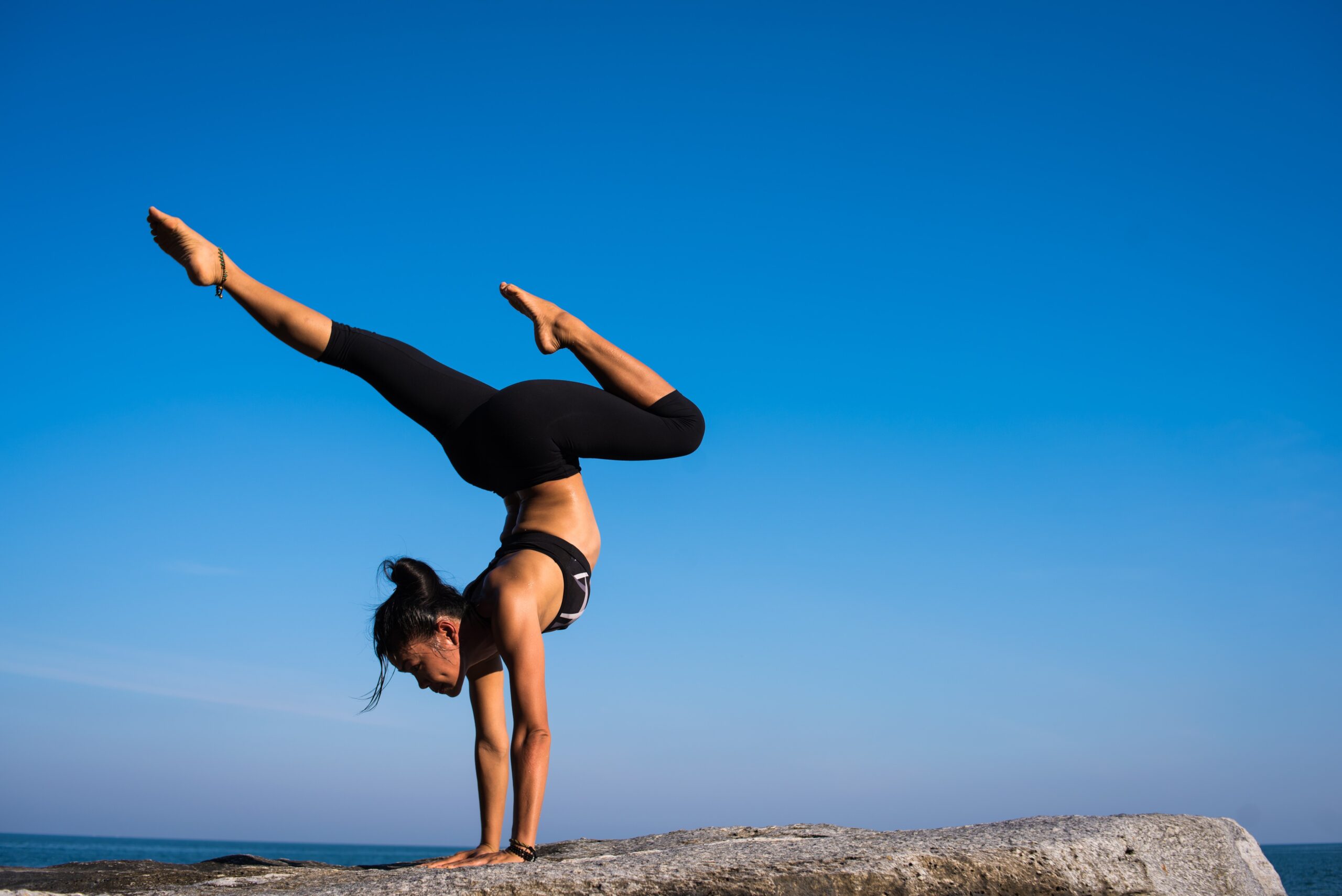
The very thing that could have been part of our medicine, becomes our poison with misuse.

With correct and relevant application, however, advanced asana can move us further along in our personal growth or spiritual journey. Recall that the human body is fantastically adaptive. For example, what once perhaps took you a lot of concentration, strength or even courage, may now lack challenge for you, so it may follow suit that you need to explore varied physical poses to help you continue your journey of self-awareness and self-growth.

Where am I meeting resistance? How does it feel to explore beyond my comfort zone? And so on.

Similarly, varying up your asana practice does not necessarily mean just making it “harder” in the commonly-understood sense of that word. Our life circumstances will change and we will grow and change. What we need to attend to and what lessons we need to learn will change with time.

Perhaps we’ve all known people who could fly like members of Cirque du Soleil through the movement part of class, but the resting pose (savasana) challenged their ability to stay still, quiet and present? Being with our own thoughts is uncomfortable for many people. For some people, treading new ground may be extending their savasana in order to observe habitual tendencies and learn to sit with discomfort. To notice uncomfortable thoughts without engaging with them, or seeking distraction.

How Social Media Can be Unhelpful

It would be difficult to argue that some of the social media displays are about meeting the public’s existing beliefs about yoga being primarily a physical activity. A great deal of social media claiming to be about yoga is in fact misconstruing what yoga really is, and may even be intimidating some people away who could have benefitted from the healing techniques of yoga.

For example, take note of how many social media posts are about helping you achieve a goal pose.  A lot, right? This is different to tips around finding a safe way to move your body. Too many social media posts offer tips “Do this in order to one day be able to do this!” Immediately, the public is given the misconception that yoga is about achieving certain shapes and anything other than that is somehow falling short. If you have ever felt this way looking at social media, take heart. Feeling your body work in any safe version of a posture with curiosity and breath awareness is the practice.  It’s not about achievement of some idealised pose.

Some people with physical limitations will never be able to ‘progress’ towards an idealised end-goal, but they can obtain the true benefits of yoga every bit as much as the next person (sometimes more so, because their ego is not getting in the way!)

We use the body as a tool in our holistic yoga practice to notice the patterns and tendencies in our mind. It’s similar to how we might use a flickering candle flame for a particular type of meditation practice in a different part of our holistic yoga practice. The candle is just a tool.

The pose is not a goal.  It’s time to stop this misinformation.   

In yoga, we practice without attachment to a result or outcome.

Remember, if you value yourself based on physical prowess, what happens if you injure yourself and need to radically adjust your physical practice?  Does this mean you criticise your beautiful self that you are no longer ‘good at yoga’?  We may enjoy and feel gratitude for a strong, healthy body, but your hamstring length does not make you better or worse than anyone else.  Through yoga we learn to value that which is unchanging within us

Further, some social media posts are contributing to a dangerous diet culture through a sexualised portrayal of yoga poses, devaluing this ancient healing practice, and fostering a society of competition, and emphasis on outward appearance.

For the social media observer, this leaves many vulnerable people with harmful feelings of inadequacy and deteriorating mental health. For the so-called yogi, this type of action moves them further away from the benefits of a sense of humility, and a feeling of connection to humanity as equals. The peaceful mind will remain elusive as the so-called yogi continues to hunt for external validation.

The true yogi does not seek to flatter themselves at the expense of other people’s mental and emotional wellbeing. The true yogi does not seek to make others feel inferior, envious or inadequate (while attempting to pass it off as ‘inspiration’).

Let’s recall, being able to do advanced poses is not necessarily an indicator of an ‘advanced yogi’

Yoga Is For Everyone

TKV Desikachar stated that “everyone can breathe, and therefore anyone can do yoga”.

Yoga is about far more than simply physical postures. Its various elements – including any physical movement – can be adapted to suit the needs of any individual.


Using Awareness to Monitor Judgemental Thoughts

When we practice monitoring our thoughts, we create space to be curious around what will arise for us as we move our body through our asana practice, to remind ourselves that we are not our thoughts and that no thought can set up shop in our head without our permission.

‘Good at yoga’ is a misnomer. Let’s let it go.

Instead of spending energy aspiring to be more acrobatic in our yoga practice, we can feel excited about what might occur when we truly begin to master ourselves:

  • We can catch our thoughts quickly, they don’t get past us without our awareness
  • We are observing our state in being in varied situations, from a mundane task like cleaning the floor, to confronting a problem.
  • We are practising summoning emotions like gratitude, wonder and awe until they are so strong they spontaneously come forth
  • We are practising embodying the qualities we wish to develop, and perhaps rather pointedly……
  • We don’t feel it necessary to label everything as good or bad.


How To Know If You’re Ready For Teacher Training

We’re not overly concerned with how long you’ve practising yoga and we’re not at all concerned if you have any physical limitations (acquired or inborne).  A wonderful teacher training candidate for us is someone who

  • has practiced yoga long enough to know for themselves that they love it, and to have had firsthand experience of some of the benefits of yoga
  • feels motivated to make time for study and practice at home on their own, as well as with us in the classroom
  • genuinely enjoys helping other people and wants to be of service (not an instructor)
  • is keen to learn all the various component parts of holistic yoga and how they weave together, and
  • nurtures a curiosity about how yogic philosophy can improve the quality of our lives  
  • is open to (or keen for) feeling transformation in their own life
  • feels super-excited about the prospect!

Sound like you? Connect with us for a chat, we’re waiting for you 🧡

Written by Nicole Small, The Yoga Institute

How Can We Help You?

500-hour Yoga Teacher Training: Read more

150-hour Yoga Studies: Read more

Join a free Information Session: Details and registration

Contact Us

Who was Tirumalai Krishnamacharya?

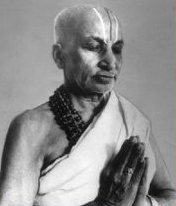
Widely referred to as the father of modern yoga and the teacher of teachers, Tirumalai Krishnamacharya, is the source of the teachings that we share here at The Yoga Institute. 

An extraordinary individual, whose entire lifespan was dedicated to the study, practice and sharing of yoga, and healing others. With multiple degrees in subjects including the Vedas, Ayurveda, Astrology, Indian Philosophy and Yoga, Krishamacharaya was an avid scholar.  He was also a family man, a teacher, healer and mentor.

The Most Famous Yogi You May Not Know Anything About

An ancient system, yoga’s development can be traced back thousands of years, with key texts and oral tradition providing a precious, and often fragile, gossamer-like thread to the present day.   Its practices and processes were not linear, with varying focus and credence given to particular aspects over the millennia, and the emergence of distinct branches of yoga, including Hatha yoga (most associated with the use of the physical body in the journey towards spiritual liberation).

The political landscape in India under colonial rule, however, saw Hatha yoga fall into decline, at peril of disappearing. A small group of individuals in the 19th century, keen to see the heritage of Hatha Yoga endure, worked hard to maintain a fragile unbroken thread of knowledge continue to be passed down.

Krishnamacharya was born in southern India in 1888, and began learning and mastering the Vedic darsanas (philosophies) as a youth, and later going on to more study including Ayurveda, Patanjali’s Yoga Sutras and the Sanskrit language.

Physical postures (asanas) are scarcely referenced in yogic texts prior to the modern age.   Krishnamacharya spearheaded their elevation and refinement, and developed new asanas and techniques, including precise and therapeutic ways they could be sequenced. A key contributor to the survival of Hatha Yoga to the present-day, he left an evolutionary footprint on postural yoga, cementing the concept of an intelligent and sequential flow of movements, and linking movement to breath.

Krishnamacharya ‘s legacy goes well beyond that of elevating physical movement and breath, however. His expertise on Patanjali’s Yoga Sutras and the Sanskrit language, also helped challenge the way the Sutras were being taught. Knowing that the transmission of the Sutras relied on processes of translation and interpretation, he offered slightly nuanced ways of unpacking each sutra, based on his deep understanding of the Sanskrit language. For example, it’s common to see the translation of the second sutra as, “Yoga is the cessation of the fluctuations of the mind”, and while this is not incorrect (indeed, it’s a tidy and readily-accessible way for people to learn that yoga is about more than physical postures), Krishnamacharya went deeper into the complex nature of each Sanskrit word chosen in the original text; he offered up an interpretation for the second sutra that went beyond calming an easily distracted mind, that Yoga was about developing the power of the mind, to bring select thoughts together in a clear, and laser-focussed way, helping the mind be capable of extraordinary (perhaps even supernatural) abilities.

Krishnamacharya celebrated the unique path and abilities of each individual, and at the core of his philosophy was for yoga teachers to teach what was authentically inside of them, customised to the needs and situation of the individual.  This approach to teaching is called viniyogathe appropriate application of yoga based on the needs of the individual and the situation.

Despite his dedication to academia and study, Krishnamacharya was keen for people to balance dedication to knowledge, with commitment to daily practice and self-observation. He taught that yoga was to be an experiential learning, that students would learn the teachings and apply them in their real lives. He wanted the wisdom to be passed down by people who had accumulated lived experiences of the teachings, by those who mindfully observed how elements of the teachings showed up in their own daily lives.


Passionate about sharing his knowledge, he wrote several books (including the Yoga Makaranda in 1934) but always attributed the wisdom to the divine and to his own teachers.   This resistance to take major credit for his own innovations and work – coupled with his lack of international travel and limited English language – meant that his role in helping yoga reach millions of people around the world, was not widely understood or valued until the latter part of the 20th century.

It was only in the latter part of the 20th century when his own students picked up the mantle to share yoga more broadly, their travels, teachings and writings captured the imagination of the world and inadvertently catapulted Krishnamacharya’s students to fame in their own lifetimes. These include Patabhi Jois, B.K.S. Iyengar, Indra Devi, Srivatsa Ramaswami, A.G. Mohan, and his two sons, T.K. Sribhanshyam  and T.K.V Desikachar (the latter being a teacher and mentor to our founder and director, Michael de Manincor). 

At age 96 after fracturing his hip, Krishnamacharya declined surgery and designed a practice for himself to do while recovering in bed. He continued to teach and enjoyed sharp cognitive health right up to his passing at age 101, in 1989. He dedicated his entire life to learning, and then sharing his knowledge, and using his yogic and ayurvedic techniques to heal people.

Honouring Our Lineage

Yoga has a long and distinguished history. Even in ancient times, yoga evolved according to time, place, needs and preferences of the people, a major reason why we there are various branches of yoga (for example, some feel more drawn to a devotional type of practice, others more so to a scholarly approach). Just as there are various branches of yoga, there are multiple lineages within branches and and it is natural that branches, lineages and traditions will overlap as much as they differ.

Honouring a lineage is not like joining a club, nor does it disregard the many other key figures in the modern history of yoga, or indeed anyone’s right to resonate with wisdom teachings from any source. Such thoughts can only lead to separation and the human tendency towards judgement, ‘right’ and ‘wrong’, ‘my way’ and ‘your way’. These are not helpful thoughts.

Krishnamacharya himself discouraged the tendency to want to separate categories of yoga. He described all branches of yoga as connected pieces of the same picture, they were all part of an integrated and holistic approach to wellbeing, and indeed to spiritual liberation, stating, “There is no jnana yoga without bhakti yoga. There is no bhakti yoga without hatha yoga”.

He and his son TKV Desikachar even leaned away from the over-use of the teaching approach terminology ‘Viniyoga’, in recognition that labels can lead to separation and judgement, and preferred to view it all as simply Yoga.
We offer acknowledgement and gratitude for Krishnamacharya’s life’s works and his synthesis of so much wisdom for the betterment of humankind.

We acknowledge, honour and give thanks to those who came before, who helped to pass the wisdom of yoga on. By honouring those who came before us, we can better be a link in an unbroken chain of yoga’s rich and healing traditions. Honouring lineage connects our practice to something greater than ourselves, strengthens our ‘gratitude muscle’, and helps protect us from the hazards of over-associating with individual ego. Many believe taking time to honour lineage is also an helpful way to minimise yoga being projected and taught as little more than an exercise class.

In our classroom here at The Yoga Institute, we like to commence lessons with invocations and chants that celebrate the coming-together of student and teacher, and acknowledge Krishnamacharya and his spiritual & intellectual forebears. Additionally, each year we honour this extraordinary man on his birthday on 18th November.

Read more about our lineage and traditions here

You can watch Krishnamacharya practising various yoga techniques here and here.

Written by Nicole Small, The Yoga Institute

Enjoyed this article?

You might also enjoy this one (click here)


How Can We Help You?

150-hour Yoga Studies course: Study yoga for pleasure and to deepen your own practice

500-hour Yoga Teacher Training course: Let us help you become a confident and capable yoga teacher, ready to share your love of yoga

Stay in Touch: Subscribe to your preferred newsletters to hear about news, training and events

Contact Us

Conscious Living Series: Our Purchasing Habits

What do we really need to be happy?  Are we unconsciously trying to buy happiness? Are we extra vulnerable in the holiday season to suggestion that purchases can solve our insecurities? What if our purchases could help nurture the world we want to create instead? Let’s take a look at how we might apply a yogic mindset to how we spend our money.
With the warmer weather towards the end of the calendar year, the Australian summer also brings a season of high-shopping.

We’re reminded that gift-giving season is soon upon us, and big sales might tempt us to acquire some items for ourselves too.  

The Australian summer is a season characterised by consumerism, and it’s easy to get swept along in the current. How can we use this time of year to bring some of the wisdom of yoga, into our modern lives?

Giving gifts to others can bring us untold joy, and we will all need to replace items in our household from time to time too.   To part with our money for things is neither good nor bad by definition. In fact, as yogis we try not to categorise things in such fashion, but we are most certainly trying to understand the real motivations of our actions and to stay awake to the notion of cause and effect.  

Yoga does not tell us what to think or believe, or how to live our lives.   That is for each person to discover for themselves (the only person who can assign meaning to concepts or things in your life, is you).  But yoga helps us be more awake to our choices by learning how to think with greater clarity, so we can make decisions that feel aligned with our true selves.   
With Black Friday sales opening the door to the season of shopping, this period can help remind us to look at how present we are with the way we behave as consumers.

Letting Go of Attachment To ‘Stuff’

Usually beginning with the Black Friday sales, we are bombarded with information designed to make us feel a sense of lack and to desire the things we see advertised. Our unconscious mind starts to draw a connection between our current feelings and our potential future feelings, “If I have that item, I’ll feel better”. And for a short while this may well be true as our reward hormone – dopamine – floods our body.

But as any of us well know from past purchases, the giddy thrill and satisfaction of our ‘new shiny thing’ wears off and we find ourselves in a cycle. This is because humans are so adaptive, we adjust to the ‘new normal’ and can feel the sense of lack and craving all over again.

Letting go of our attachment to ‘things’ invites freedom, a sense of lightness and unburdening.   In yoga, we call this non-attachment ‘aparigraha’.  Aparigraha is one of Patanjali’s yamas in the 8 Limbs of Yoga, contained within Patanjali’s Yoga Sutras literature (a literary guidance on how to evolve our thinking and live with greater ease, freedom and peace).

If we are overly-focussed on acquiring material things, we lurch from one hit of the reward hormone dopamine, to the next, confusing temporary pleasure for happiness. We also miss out on the healing power of gratitude that comes from appreciating what we already have. 

Sometimes the desire to purchase something can pass the way that an unscratched itch will eventually pass, if we pause and simply notice where our mindset is at.  

Being Mindful of Consequences

There is also quite a lot of power in our purchasing decisions, we can be encouraging business to behave unkindly to other humans and the planet, or we can be encouraging certain business practices that feel better aligned to our values, and nudging others to evolve to a higher standard.   

Exploring the domino effect of your purchasing decisions can be a rabbit-hole, so a sound suggestion is to start with one area that feels most important for you, arm yourself with new knowledge, and then add more layers to your decision-making process later on.

For example, you may choose to start with homewares and fashion and begin to educate yourself on the impact of where and how things were produced, such as the environmental impact of a certain fabric production, whether items are recyclable or will become landfill, or a manufacturer’s transparency on how employees are treated and paid.

Or, you may choose to begin with food, such as do the ingredients give you or rob you of vitality, have growers and producers been fairly paid, what sort of environmental impact does this foodstuff cause.

Perhaps you begin with your financial accounts: does my institution lend to unethical or unsustainable businesses, is my superannuation being invested in ways I feel uncomfortable with, is my institution giving back to the community and society in some way….)

As you explore, you will find many website and apps to assist you. Resist the slide into perfectionist thinking and and all-or-nothing mindset. Change is a direction, not a destination, congratulate yourself on small changes and doing your best.

Checking ourselves

It can be useful if we train our minds to be as conscious as possible of what we are purchasing and why.  To do this, we can borrow from the mindsets of minimalists and eco-warriors for example, to probe our true motivation and assess our comfort level with the domino effect we’re creating.

Start with the why:

o Is this an impulse purchase?

o Am I shopping to try and feel better about something or distract myself from something?

o Would I buy this if it wasn’t on sale?

o Rather than accumulating ‘stuff’, does investing in myself make more sense?

o Is there another way to show someone I care?

Then consider the consequences of this purchase:

o Was it produced in a sustainable and responsible manner?

o Was anyone or anything exploited (or wasted) in the production of this item or experience?

o Will this be landfill in a few years and how long will it take the break down?

o How does the business I’m giving my money to treat things like the environment, people, community?

You may have identified something you want or need to buy, and are feeling satisfied with how it has been produced. Those times when sales are on can indeed be an opportune time to get the item you’ve been meaning to buy for some time. The key is simply to practice conscious choices, rather than shopping from habitual societal conditioning, or as servants to our reward hormone.

We can practice playing ‘harder to get’ in a society that wants to keep you in a cycle of suffering by comparing your ‘stuff’ with other people’s ‘stuff’ and trying to keep up with those damn Joneses!

Caught yourself? Have a giggle and congratulate yourself for reclaiming some free will!

Food For Thought

  • You may like to explore business models like https://www.greenfriday.com.au/, a collective of responsible businesses trying to increase awareness of ‘conscious consumption’.
  • Or simply mull over a comparison of future emotions: how it might feel to acquire the new thing, compared to how it might feel to give that same amount away to a person or cause in need, or to invest in yourself.

The Role of Yoga

Yoga encourages each of us to examine how we think, so we can truly think for ourselves, instead of being an unconscious product of our past-conditioning. Yoga does not tell us what to think, that is for you to figure out.

Yoga teaches us how to think more clearly, for ourselves.

With continued study of the teachings of yoga, many people come to recognise the inter-connectedness of all things, so it is not a coincidence that many yogis come to be mindful of how things how food, fashion and homewares are produced; they may become curious about which businesses tread lightly on the earth; and they may want to know how workers and other people get treated. But each journey is unique and only you can decide what is important to you at any point in time. Where you place your mental energy is up to you to choose.

Letting our minds wander over the kind of questions listed above can, however, help us decide if we really want to purchase something or allow our money to support a particular business. It can also help us feel good about which businesses we support, and which we choose not to. We may not see all the results, but we can feel satisfied our efforts are playing a role in creating the kind of world we’d like to live in.  

As with your practice on the mat, conscious living doesn’t mean we strive for perfection:  just stay present, stay curious, and practice kindness to yourself when you notice past choices don’t match current values.  This is a sign you’re becoming more aware of your choices   🧡

Written by Nicole Small, The Yoga Institute

How Can We Help You?

Explore Teacher Training

Subscribe to our newsletters

Contact Us

Podcast: The Nature of Consciousness

Our own Michael de Manincor joins the chat on ‘Live Like You Love Yourself’ on the topic of consciousness.

The Yoga Institute’s founder and director Michael de Manincor, recently spoke with podcast host Chara Caruthers, and guest co-host (and TYI faculty member) Lucy Karnani for the podcast, Live Like You Love Yourself. 

The trio’s discussion makes a profoundly deep topic accessible and entertaining.

Pondering whether consciousness is even knowable, the discussion also explores whether the simple act of discussing it, helps each of us move closer to understanding what this meaningful topic means to us personally, allowing the listener to start their own contemplation, to see what resonates.

The trio look at the minefield of language: what do we mean by mind, let alone consciousness, and to unpack this, we go back further to what does body even mean. Some believe that the collection of functions and processes by which we perceive the world, perceive ourselves and navigate the embodied experience of life, is the definition of consciousness, but what then of the processes of which we aren’t aware, or cannot be aware of?

Do the neurosciences that on the one hand help verify so many yogic teachings, also limit our understanding by over-focussing on the brain‘s role as part of mind? Michael posits that mind is a whole body experience, including the heart, the gut, the nervous system, indeed incorporating every system, organ and cell in the body.

Listen in for the discussion around what terms like self-realisation and enlightenment relate to consciousness; as our yoga practice leads us to enquire about our true self and the nature of our existence, we are invited to explore letting go of the sense of self, who we think we are. The prospect of dissolving our attachment to who we think we are is understandably daunting, even terrifying – to truly let go of all the things we have spent carefully constructing as our sense of identity. As our yoga practice draws us closer to this stage, however, the sublime paradox exists that it is the self, the “me” that wants to know self-realisation, that wants enlightenment.

Enjoy this playful and candid exploration of life’s biggest questions!

LISTEN HERE


Keen to take your yoga to a deeper level?

Our study options aren’t just for aspiring teachers, but for anyone who wants to deepen their personal practice or simply gain a better understanding of the breadth and depth of the life-affirming practice of yoga. All of our courses are birthed from the teachings of yogic philosophy, yogic psychology, to aid in all aspects of wellbeing.

Interested in our 500-Hour Teacher Training Course?
Get course prospectus
Join our next information session

Prefer to start with a smaller commitment or obtain additional study?

Learn more about our 150-Hour Yoga Studies course

Fascinated by yogic philosophy?

Our popular 6-week Sutras Studies courses may be currently on hiatus but will be back!

Get in touch:
Email: teachertraining@yogainstitute.com.au

Join us, together we will grow, learn and inspire.

Yoga Instituteyoga teacher trainingyogic philosophy

Is Sitting The New Smoking?

Prolonged-sitting has been described as the new smoking for its potential damage to our overall wellbeing.  Here we look at ways we can counteract unhealthy habits to give ourselves greater ease and comfort, now and in the future.

What’s wrong with sitting?

Nothing is inherently wrong with sitting. But in modern life, there is a great trend towards health issues for people who sit for long periods of time working at a desk, or anyone with a sedentary lifestyle.

Many of us are not aware how to ergonomically best set ourselves up for working at a desk, so right away we may be unknowingly inviting discomfort, strain and tightness into our bodies.

But even with a great desk set-up, one of the biggest mistakes we make is simply staying in one fixed, seated position for too long. The body loves regular movement, to keep joints supple, muscles relaxed and to ease out any tightness, but there’s more at stake here than simply keeping our body supple.

Prolonged sitting can increase the risk of:

  • Musculoskeletal issues
  • Poor metabolism, weight gain, heart issues and other chronic conditions, plus
  • Mental health issues such as depression
  • Energetic stagnation

Musculoskeletal issues can arise in the form of pain in the neck, back and shoulders, tightness in the hips. More specifically, sitting can increase the pressure on the lumbar discs in your lower back, while weight-transfer compensation can mean shoulders end up hunched and rounded, with a forward-head posture, creating additional problems for ligaments and discs in the upper back and neck (made worse of course by our constant mobile phone gazing)

Hip pain can arise as hip flexor muscles become shorter and weaker from prolonged sitting. 

Other chronic conditions linked to prolonged sitting include varicose veins, cardiovascular issues, weight gain, high blood pressure, metabolic syndrome, and diabetes.

Mental health issues such as anxiety and depression have been linked to sitting, with research continuing to pinpoint exactly why.  One strong theory is that physical movement has a protective effect against such conditions and without it, we simply put ourselves at greater risk of mental health issues.

Plus,

Energetic stagnation, which means prana cannot flow smoothly and well, which can impact our mind, body and emotions.

A yogic lifestyle moves us towards flow, and away from stagnation

What Can We Do?

  1. Workplace Desk Set-Up

    Start by getting the basics right. Choose a chair that supports your spinal curves and allows your feet to rest flat on the ground (or on a footrest).

    Adjust your chair so that your knees are about level with your hips.

    Upper arms should be comfortably close to the body while working, with hands at or just below elbow height.  Position mouse and keyboard to avoid crunching in the wrists.

    Your screen should be at eye level, to prevent neck strain.

    If you’re fortunate enough to have an adaptable desk that goes from sitting to standing, take advantage of this benefit.  Pedal machines under the desk are increasingly popular too, to keep blood circulating well. 

    Don’t forget!  Where possible, make your work environment pleasant with a clean space, natural light and real plants.  These may not save your posture, but they will help your frame of mind on those stressful days, as part of overall wellbeing.


  2. Get Up and Move Regularly!

    Regular breaks to stand up, wriggle and stretch are not just useful for easing tension out of the body, they give your precious eyes a rest from the monitor, and also act as a natural stress-release.

    Try to give your eyes a break every 15 minutes, and at the same time you can do simple seated releases such as spinal twists, wrist circles and neck stretches.  

    Endeavour to stand up every 30 minutes, wriggle your hips, stretch your legs and take more spinal movements such as a mini backbend.

    You might like to take a phone call while standing, suggest to a colleague you walk together for a one-on-one meeting.

    “I can’t stop, I’m in the zone/facing a deadline/just want to be finished and get home…etc”

    Sound familiar? There will be conscious choices on your part involved, some discipline. We know breaking habits can be very difficult. If stopping every 30 minutes starting tomorrow sounds insurmountable, start with at least a few breaks throughout the day. The all-or-nothing mindset is not helpful here. Just like your yoga practice, start where you can and build up over time.

    You are worth the effort to protect your wellbeing.

    Sometimes we need to remind ourselves that if we don’t make time for our health, we’ll eventually end up having to make time for our illness. Each time you remember AND action a little break and stretch, congratulate yourself!


  3. Yoga While You’re Sitting….

    Start with a few deep, slow cleansing breaths and try some easy postures and stretches to break desk-sitting:

    – Gentle neck rolls
    – Seated Cat and Cow spinal movement
    – Wrist and finger stretches
    – Seated side stretch and spinal twists
    – Seated cobra backbend with arms wide
    – Sit-and-stand repetitions
    – High squat hip opener
    – Seated forward fold

    Need some guidance or inspiration? Here’s a little sitting practice we love from Tim Senesi (Yoga With Tim) to help release tension during the day:
    Enjoy a 6-minute Yoga With Tim desk break


  4. And Yoga When You Can Get On Your Mat

     – Chosen breathwork
     – Child Pose
    – Neck rolls
    – Cat & Cow
    – Standing Forward Fold (Uttanasana)
    – Crescent Lunge (Anjaneyasana)
    – Downward Facing Dog (Adho Mukha Svanasana)
    – Cobra (Bhujangasana)
    – Seated Butterfly (Baddha Konasana)
    – Bridge (Dvipada Pitham or Setu Bandhasana)
    – Supine Twist
    – Legs Up The Wall


Yoga doesn’t just help undo the physical dangers of sitting. It can also help with total-person wellbeing by reducing stress and easing emotional distress, states often associated with work.

Existing Health Issues?

A yoga therapist can work with you to understand your lifestyle and health issues, and develop a practice tailored just for you, to help you manage and improve an existing condition.

Written by Nicole Small, The Yoga Institute


How Can We Help You?

Try a yoga class at Cammeray Yoga

Contact us

Can Stress Make Us Sick, and How Can Yoga Help?

How does stress impact our immune and inflammatory responses, and what role does yoga play in regulating our body’s response systems?

The words ‘stress’ and ‘inflammation’ can often be associated with purely negative implications, but the truth is that both can be helpful or unhelpful.

Stress and inflammation play a vital role in our body’s ability to defend itself and maintain homeostasis, but chronic, unchecked stress & inflammation leaves us more vulnerable to a range of complications and conditions. Let’s break it down to note where a natural body response becomes problematic.

Stress 101

Eustress vs distress

Stress is a natural physiological and psychological response to our ever-changing perceptions of our circumstances.

Exercise is a form of good physical stress that prompts our muscles to strengthen and lengthen. Good psychological stress can can feel energising, motivating, or even exciting. It helps us stay focussed and energised during a test or job interview, and give us those feelings of excitement & thrill on a first date or rollercoaster!

Distress is when the stress response adversely affects us. It can be prompted by just about anything that we perceive as being a threat to our physical or emotional wellbeing, or beyond our immediate coping resources, such as a death, relationship tension or separation, financial crisis, abuse or injury. It can include effects such as mood deterioration, shortness of breath, fatigue, sleep and appetite issues, headaches and feelings of overwhelm.

The body’s response to threats

When a stimuli or threat is perceived, our body is capable of producing chemicals that can help us adapt. In the case of a perceived threat, the body will move resources away from actions that it doesn’t deem necessary there and then (such as digestion) and towards the job-at-hand of keeping you alive. This is the Fight, Flight or Freeze response.

During this response, our body’s sympathetic nervous system is activated: adrenaline and cortisol chemicals are produced, our heart rate increases, our breath shallows and quickens, pupils dilate to hone in one particular thing, blood rushes away from extremities and digestive systems and towards muscles.

Evolutionarily, this helped us run from predators, hide from enemies or fight an attacker.

Unfortunately, the amygdala part of our brain (responsible for processing emotions around fear) can set off the alarm in non-life threatening situations, putting us into survival mode well before our rational mind has a chance to assess the situation. Put simply, our body can’t always distinguish between a situation that genuinely puts our lives at risk – such as jumping out of the way of an oncoming vehicle – and all the other things life throws at us every day such as deadlines, workloads, relationship problems, shuttling our children to daycare, or heavy traffic.

Our bodies are well-equipped to deal with short acute bursts of stress, but are not equipped to tolerate chronic, unrelenting stress with swirling stress chemicals ever-present.

“Between 70% – 90% of all conditions that a primary care doctor sees in any given day, are in some way related to stress” (Dr Rangan Chatterjee)

Read. That. Again.

Without a way to balance our nervous system and allow the Parasympathetic nervous system to take the lead (otherwise known as ‘Rest & Digest’ or ‘Feed & Breed’), the toll on our body is associated with increased risk of heart disease and stroke, obesity, metabolic syndrome, arthritis, mood & sleep disorders, and a reliance on addictive distractions such as alcohol, gambling, television, food, internet and nicotine. (Yes, there ‘s a big difference between consciously choosing to enjoy a TV programme for example, and being anaesthetised by an unconscious go-to habit)

Inflammation 101

Inflammation is generally a natural and helpful response to the presence of pathogens or physical or chemical injury. (but it can also be activated by processed food and other poor nutrition habits, oversensitivities/allergies and stress). It is part of our immune response.

We have specific immune cells that act as watchdogs to start the inflammation response when necessary to arrest invaders and heal damaged tissue. We can observe this in the way of heat, swelling and pain and these symptoms are designed to be short and adaptive, while our body recovers.

Much like stress, our body is well-suited to short bursts of acute inflammation, but not to long-term chronic inflammation and we know that chronic inflammation is the pathway to chronic disease.

Stress & Inflammation

The special cells (such as cytokines) and chemicals in our body (such as cortisol) designed to initiate inflammation can self-perpetuate under conditions of chronic stress, damaging healthy cell tissue, suppressing immunity and leaving us more prone to colds and flu and other infections, cardiovascular disease, arthritis, depression, digestive issues such as Irritable Bowel, and cancer.

Stress & Telomeres

Telomeres are the protective DNA-caps at the end of chromosomes. Each time a cell divides, the telomere shortens until tissue-ageing occurs. Telomeres can be replenished by an enzyme called telomerase, but this is also impacted by chronic stress.

In short, stress can quite literally make us sick and can even shorten our life!

The study of the interplay between our stress response (brain and nervous system), with our hormones and other chemicals (endocrine system) and our immune response is a relatively new field of science (perhaps a few decades old) called Psychoneuroimmunology (PNI for short).

Managing Inflammation

Given that inflammation can have multiple causes, it makes sense that a strategy involving multiple factors may be most beneficial, influencing inflammation directly, and indirectly via stress management. This may include:

  • Improving the quality of food that you eat (fresh, seasonal food with an emphasis on plants)
  • Improving sleep habits
  • Introducing small self-care daily routines into your day including mindful movement, pausing and resting, self-massage, getting fresh air and connecting to nature
  • Conscious breathing
  • Reducing exposure to screens (especially dramatic or violent depictions)
  • Finding more laughter
  • Find your ‘tribe’ and develop strong social ties that uplift and nourish you
  • Resolving long-standing resentments and other psychological issues

Yoga’s Contribution to the Management of Inflammation

The holistic healing nature of an integrated yogic practice, including asana, breathwork, and meditation, can play an important role in balancing the body’s biochemistry, and thus our vulnerability to chronic illness.

Mind-body practices are shown to modulate inflammatory markers such as cortisol, and help prevent our stress and inflammatory response from becoming hyperactive or maladaptive.

With yogic models of care coupled with an ayurvedic lifestyle – incorporating healthy self-care daily habits that honour the body and the connection to nature – we give our body its best chance to self-regulate, heal itself and reduce the risk of chronic illness.

This topic also beautifully demonstrates the interconnected nature of our mind, body and emotions, the power of a whole-of-person approach, and the yogic principle of not seeking quick-fix ‘hacks’, but rather introducing incremental and sustainable healthful habits and practices into all aspects of our life.

Written by Nicole Small, The Yoga Institute

Learn more about:

Posture in Focus: Downward-Facing Dog

Let’s comprehensively unpack the features of Downward-Facing Dog to enjoy its full benefits in safety.  

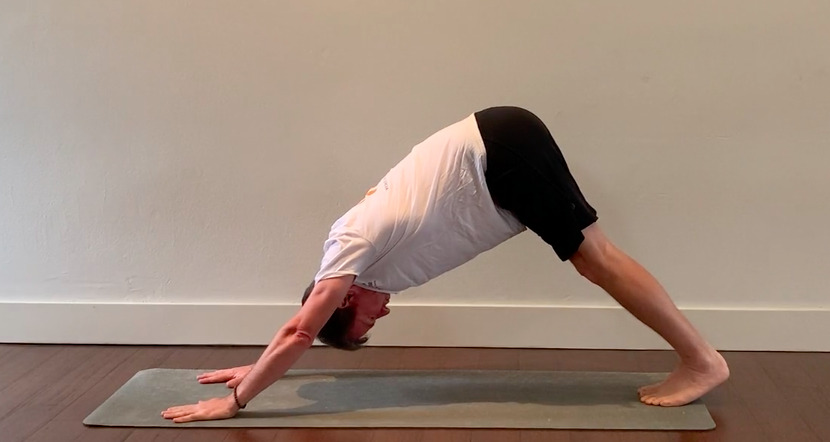
Perhaps one of the most famous yoga postures, Downward-Facing Dog is suitable for Beginners through to Advanced, and in addition to being a pose unto itself, is often used as a transition between poses.

Also known as

Adhomukha Svanasana

Adho = Down,

Mukha = Face,

Svana = Dog,

Asana = Pose

In English, it’s often abbreviated to simply Down Dog for ease.

Classification

Pascimatana (forward bends)

Benefits & Effects

Down Dog can be both energising and restorative. It brings warmth to the back of the body and shoulders, and lengthens the spine, but being a pose where the head is lower than the heart (it could also be fairly classified as an inversion), it also soothes and relaxes the nervous system.

Vinyasa krama, breath and drishti    (How To…)
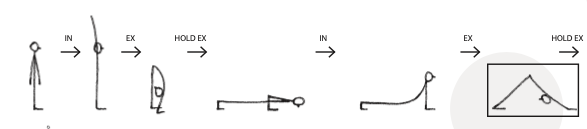
One of the classical ways to enter the posture is this:

  1. Stand in samasthiti.
  2. Inhaling, raise arms from the front, in line with ears, palms facing the front.
  3. Exhaling, bend forward and place palms by the sides of the feet, bending knees where necessary, head touching legs (if applicable), chin down.
  4. Holding the breath out, shift weight onto hands, lift legs back, landing feet together in a horizontal position (chaturanga dandasana), or simply step back into your plank posture.
  5. Inhaling, lift chest up while straightening elbows into Upward-Facing Dog
  6. Exhaling, lift hips up, move chest towards the legs, crown of the head down. Legs straight where possible, weight on hands and legs, heels reaching for the floor, chin down. Breathe naturally.

This vinyasa krama can be varied for different ages, abilities and other circumstances.

Alignment and things to watch for

  • Upper arms should externally rotate
  • Spine is straight, bend the knees a little if necessary
  • Broadening across the upper back can take the crunch out of shoulders in ears
  • The shape of your ankle joint can influence the heels’ ability to reach towards the floor, as much as hamstring length – forcing the heels down can injure your back. Some people’s heels will never reach the floor.
  • Effort without a sense ease may result in holding your breath!  Let breath be your guide.  

Preparation and Counterposes

Gentle warm-ups may include for example:

Cat & Cow spinal movements

Wrist circles

Standing Forward Fold (Uttanasana)

Puppy Pose

A classic counterpose is the restful Childs Pose (Balasana)

Modifications and Adaptations

  • Placing a blanket under the hands to take the pressure out of wrists
  • Bent knees can help if you tend to round your spine in Down Dog, to take some of the stretch out of tight hamstrings, or if you have lower back pain.
  • See also Contraindications below

Experiment with:

  • Lift one leg straight up into 3-Limbed Stick (3-Legged Dog)
  • Play with an inversion modification by placing hands on the floor with feet on a wall
  • Try Revolved Down Dog by releasing one hand at a time to take hold of the opposite ankle, twisting the upper body.

Contraindications

People with neck, wrist or shoulder injury are best advised to practise under the supervision of an experienced teacher or yoga therapist.

This pose may not be suitable for people with low blood pressure, eye conditions such as glaucoma, or acid reflux issues, but may be adapted to have hands on a wall or chair instead of on the floor.

Written by Nicole Small, The Yoga Institute

Learn more about:

The Yoga Institute Team Recommends: Our Top Picks Over Recent Months!

As the weather turns cooler, we may be tuning into the instinct to slow down and consciously spend time with books and other thought-provoking media that serve and nourish us. A good book, podcast or film can be one that delights, sparks imagination, feeds our curiosity, or even challenges us to consider something new.

And who doesn’t love a word-of-mouth recommendation? Here are some top picks that our staff and faculty have been loving recently. We hope you feel inspired to take some time to nourish yourself, relax, learn and enjoy!

Books

Phosphorescence – by Julia Baird

Part-memoir, part-self-help, Phosphorescence aims to help us see how we can nurture and sustain a sense of contentment, especially when rough times hit and the ‘darkness’ threatens to diminish the light in our life.

No Mud, No Lotus – by Thich Nhat Hanh

While the beloved Vietnamese monk and peace activist has sadly passed, one way his legacy lives on is in the poetic words of his books. In No Mud, No Lotus he teaches that when we distract ourselves from suffering, we can’t genuinely learn how to suffer. When we embrace the suffering, we have a chance to calm it, so we can stop running.

Atlas of The Heart – by Brené Brown

Acknowledging that sometimes we are swimming in a sea of emotions, challenged to distinguish them clearly, let alone understand what they mean – both our own emotions and others’ – Brene Brown compiles 87 emotions and experiences that define us as humans, and maps out how we can be more precise in our self-awareness, and engage more meaningful relationships with others.

Sorrow & Bliss – by Meg Mason

A sad and funny novel about Martha’s attempts to understand the twists and turns her life has taken and to understand who she really is.

The Hidden Life of Trees – by Peter Wohlleben

Drawing on new scientific discoveries – including trees’ ability to communicate, share nutrients and regulate extremes like heat and cold – we’re not only left with a new sense of awe, Wohlleben skilfully illustrates how eco-friendly practices are not just beneficial for economies, but for physical and mental health of all living things.

The Biology of Belief- by Bruce Lipton

The 10th anniversary edition of Lipton’s seminal work, integrates the exponential growth in scientific research in the last decade. In this book, cell biology collides with quantum physics to show more powerfully than ever, that our destinies are not shaped by our genes and DNA. Rather, cell components are responding to energetic signals from elsewhere…..including our own thoughts! If you’ve ever struggled to unite science and energetics, get ready to shift your beliefs.

The Way of Integrity – by Martha Beck

This book invites us to consider what makes us feel whole, and gives small, manageable steps in the process of attaining a sense of harmony with ourselves. Doing so helps us lean towards what we truly yearn for, and not just what our culture and other externalities sell us.

Salt, Fat, Acid, Heat – Mastering The Elements of Good Cooking by Samin Nosrat

Wth science, personal stories, cooking and visuals, Nosrat explains how mastering the four elements of salt, fat, acid and heat can totally change the way you cook anything, producing precision in texture and flavour. Many yogis are interested in integrative dietetics, which allows them to blend modern food science with chosen traditional food practices. Indeed, characteristics such as taste, texture and temperature are foundational in ayurvedic diet practices, making space for modern science in our chosen home-cooking.

Scattered Minds – by Dr Gabor Maté

With a physician background, Gabor Maté is a sought-after speaker and writer on addiction, trauma and mental wellbeing. Scattered Minds is Maté’s in-depth look at Attention-Deficit Disorder (ADD). Coupling the science of ADD (contrary to misconception, it is a reversible development disorder, not an inherited trait) with practical help for how parents with ADD-affected children and adults with ADD themselves, can gain insights into their behaviour.

Braiding Sweetgrass – by Robin Wall Kimmerer

Blending botanical science, academia and indigenous wisdom of her Potawatomi heritage, and described as “poetic instruction”, this book examines the connections that bind all living things, and the evolution of ecological consciousness. A moving and provocative book with gorgeous quotes such as, “Plants know how to make food and medicine from light and water, and then they give it away“.

Guided Relaxation – by Katie Brown

In a world where many people will look puzzled at the notion of a difference between downtime and conscious relaxation, let alone know how to relax, senior yoga teacher Katie Brown guides people how to access the benefits of true relaxation. With tips around postures, props, breathing, and over 30 guided relaxation scripts, the book is as practical as it is beautiful to look at and leaf through. We love that it needn’t be read from front to back necessarily, but can also be dipped into as needed, and can be used by individuals for personal benefit, or equally by yoga teachers with their students.

YouTube Video

The Near-Death Experience of Ingrid Honkala

PhD scientist Ingrid Honkala describes her childhood near-death experience in Colombia, and the injection of knowing installed in her. But when life distracts her away from her authentic self, she recounts bottoming out at a place where only two choices exist: the path of suffering or the path of light, and what she did to find the light again, offering hope that answers can come when we need them.

Honkala describes the purpose of time and experience is to help you remember who you truly are, to bring you back to Source: “It was the realisation that there was nothing to forgive. Because nothing had ever been done to me, to hurt me.  It had been done for me, to bring me to wake up [sic]”.

Podcast

#214 Powerful Daily Habits to Reduce Stress and Anxiety: Feel Better, Live More with Dr Rangan Chatterjee

This episode is a special compilation of other episodes of Dr Chatterjee’s much-loved podcast, themed specifically around the stress response, looking at how a useful evolutionary response can become unhelpful and downright dangerous when its unrelenting. With nearly a dozen special guests, including psychologist Dr Kelly McGonigal, founder and CEO of Calm Michael Acton-Smith, and author of bestseller ‘Breath’ James Nestor, the podcast acknowledges that stress is part of life, but offers tools and tips that can help reduce stress’ harmful impacts.


How Can We Support You?

Sign up for our newsletters here

Curious about studying yoga with us?

Study yoga for pleasure or to add to prior credentials

Study yoga to become a teacher

Email us: teachertraining@yogainstitute.com.au 

What Does Philosophy Have To Do With Yoga?

Many people approach the start of a deep dive into yoga study with an impression or inkling that there’s some kind of philosophy attached to yoga – usually from brief references made during yoga classes.  But until you actually study yoga in a comprehensive way and see how all the various parts fit together, you may well be wondering, “What on earth does philosophy have to do with my yoga and why should I bother to learn it?”

Many of us will be familiar with yoga classes featuring snippets of wisdom amongst the asana and breathing practices.  Perhaps you were invited to ponder how pushing yourself beyond your physical limits or paying attention to your own negative self-talk were contrary to the yogic principle of ‘do no harm’.  Maybe you were invited to contemplate ‘surrendering’ into a particular posture.

For yoga enthusiasts yet to undertake any formal yoga studies, it may be difficult to see the big picture that your yoga teacher is so keen to reveal to you and why.

Even for very experienced yoga teachers, weaving the wisdom of yogic philosophy into mainstream classes can be a challenge.  Yoga teachers are attempting to meet people where they are at, and for many, this is a patient and loving journey to helping people simply see that yoga is about far more than just physical postures.

This can be a slow transition. Yoga teachers are very aware that many of their students have turned up for a physical workout, and all the specific benefits that go along with physical prowess.  They know that if they talk about philosophy for 15 minutes, there’s a risk this may be too-much, too-soon for some people who then don’t return, and a bridge may be lost.   So yoga teachers tend to take a gently-gently approach, dropping little breadcrumb pearls here and there, to gently move people towards an interest in observing their own thought patterns and way of being.

What yoga is really all about

What your yoga teachers have been doing is fostering opportunities for you to change the way you think.

Because, let’s face it, on some level you already know that once you’ve nailed the perfect chaturanga/headstand/splits etc, the satisfaction will wear off and there will be something else to replace this desire, and we’re suddenly back to a state of striving with feelings of dissatisfaction or lack. 

“You know what happened when I finally got handstand lotus in the centre of the room?

NOTHING!….

…..I still had to go home and wash the dishes” (Judith Hansen Lasater)

This snapback sensation of dissatisfaction is true of any goal or acquisition that is external to us, where we place our ‘happiness’ in the hands of things are temporary by nature (such as physical prowess…one day we will age), or where we over-identify with goals that feed our ego.  Feeding our ego doesn’t satiate its appetite; to the contrary, being fed makes ego’s appetite stronger, so it needs to be fed over and over and over, more and more. The result is that we are constantly chasing something outside of ourselves to feel better. 

But we need not live this way, with this restless mind, craving and heartache.

What if being human came with an instruction manual that taught us possible ways to free ourselves from suffering? 

‘Enlightenment’ is a big concept – worthy of its own libraries of content – and can be tricky to wrap our heads around.   Some people prefer to see themselves simply on a journey towards sustainable calm and contentment.

A sense of sustainable contentment and peace comes from within, so it is changing the way the mind works that forms the foundation of yoga.  

We can use physical movements to work through the body – being the most accessible and relatable layer of our selves – but the real shift happens in our mind and emotions.

Here at The Yoga Institute, we often use the terms yoga philosophy and yoga psychology interchangeably, as we guide people to see the influence these learnings can have on mental and emotional health.

Through yoga we learn to observe ourselves as if observing a third person. This self-awareness gives us the freedom of clear-thought, so we can make conscious choices in our lives and not suffer unnecessarily at the constructs of our own minds.

For example, we’re all familiar with the little inner-critic that says things like, “You’re not good enough”, “They don’t really like you”, “That only works for other people, you can’t do it”, “You’ll never heal”, “Life will always be hard”……. Yes, that voice, we all have one! We could all benefit from being present enough to choose not to believe every thought that pops into our heads, right?

Just because a thought arises, doesn’t make it true. You are not your thoughts. This is the gift of yoga.

But we can’t exercise our right to choose which thoughts to believe, if we don’t actively practice monitoring and observing our thoughts.

Without self-awareness, our thoughts will take us down some deep and self-limiting rabbit-holes faster than you can say “Yoga pants”! It is the practice of observing ourselves that allows us to select which thoughts we will engage with or entertain. We do not need to be passengers.

This is why here at The Yoga Institute, we often say, “Anything you do with attention to how you feel and how you are being, is doing yoga”. Every moment of the day is an opportunity to observe how we are being.

The human instruction manual

Yogic philosophy is often referred to as a blueprint for how to live well, how to how to live happy, healthy and peaceful lives with the double-edged gift of being born into the human condition.  

Our true, unchanging self  – with its calm, loving and peaceful ways –  is already there and has always been there; our work as humans is to learn how to remove the mental blockades we’ve made for ourselves to re-connect with our real selves.

“Whaaaat?”    Ok, let’s re-phrase this a bit more plainly for the modern era:

People who have experienced the benefits that yoga can bring – benefits that go well beyond the physical level, such as a sense of calm or greater patience – make ideal candidates for teacher training.  Their own lived experiences tell them that yoga isn’t just an exercise class, that there’s something more here.

Yoga, spirituality, religion – how do they all fit together?

It’s important to note that Yoga is not a religion, as can on occasion be misinterpreted. With consciousness, humans sought to find practical answers to life’s most profound questions. History shows us this quest can lead to the existence of religions, but there is an important distinction between philosophy and faith.

In yoga we contemplate the concept of ‘self’ – that unchanging part of ourselves, that part of ourselves that knows that despite how our physical appearance changes over a lifetime, and despite how much our opinions, attitudes, likes, dislikes and so on are all subject to change over our lifetimes, we recognise it’s still us inside, there’s something unchanging within us – and this can feel quite spiritual for some people.

Nothing in the study of yogic philosophy asks for you to accept or believe anything on face value. We discuss at length the lessons Patanjali may have been endeavouring to impart, looking at multiple interpretations and translations. Your part is simply to be curious, see what resonates for you, and to see how things may show up in your own life.

Yoga does not seek to override or supplant anyone’s existing religion. It can co-exist and even enrich people’s faith systems. Yoga does not tell us what to think, it teaches us how to think with greater clarity.

To connect with one’s unchanging self is to simultaneously witness that we are also connected to – and part of – something greater than ourselves. This process and experience is not restricted to people who align with a particular earthly set of beliefs, it is the birthright and potential of every single human being, irrespective of the presence of a religion or not.

A lot can be said about what is yoga. One meaning of the word yoga is to tie the threads of the mind together. Yoga is not a religion. But a religious person can use yoga. Whether you’re a religious person on non-religious person, you need a mind to understand life….. Yoga is not a religion, it is a discipline.” (TKV Desikachar)

Sources of Yogic Philosophy

You may on occasion hear of ancient texts such as The Bhagavad Gita, Patanaljali’s Yoga Sutras, and their older forebears, The Upanishads and The Vedas.

The Bhagavad Gita and the Yoga Sutras are often seen as the distillation of the existential wisdom that had – up to their creation – been passed down in either in oral tradition or in extensive volumes of literature. 

Patanjali’s Yoga Sutras

For thousands of years before Patanjali write the Yoga Sutras, humans had been contemplating who was the observer of their own actions, reflecting on the concept of ‘self’. 

As you may well expect, a comprehensive instruction manual for how to live with the human condition, may get very long and complex after all those years.

Patanjali sought to condense the recipe for freedom from suffering into a more succinct text, elegant and almost poetry-like.  Each sutra is about one sentence long (sometimes two or three), and totalling less than 200 all together.   

The resulting text, consisting of 4 main chapters, was abundantly more portable and easy to reference.  However, so much depth has been packed into the careful and deliberate choice of words in each sutra, that its richness is best revealed with the help of someone to guide us and help us unpack each sutra and guide us around how we can observe this for ourselves in our real life.  

The 8 Limbs of Yoga are perhaps the best known section of the Sutras, including ‘codes of conduct’ referred to as Yamas and Niyamas.   Books and books can be written on each sub-topic and the sub-topics under that, and so on.  However, the 8 Limbs are only a comparatively small piece of the broader wisdom on offer.   

With the help of an experienced guide to unravel the ancient wisdom, and the encouragement to then notice these aspects showing up in our lives and to experience their teachings beyond their academic contemplation, well, this is when aha! moments happen.    And the seeds of transformation start to grow and bear fruit. 

Why we place so much importance on yogic philosophy

Our mission is to help people deepen their love and understanding of yoga, and to help people share the healing power of yoga.  Particularly for those people who feel drawn to learn how to teach yoga to other people, there is a significant mantle of responsibility.   

At The Yoga Institute, we dedicate a lot of time exploring yogic philosophy and helping people see the mind-body-spirit connection.

Having a suitable guide, plus the time and spaciousness to allow aha! moments to occur is critical to quality yoga training, so that you may in turn guide other people towards their own shifts and transformation. 

As people grow and change with their yoga journeys, they not only become calmer, more resilient to change and stressors, with a greater sense of wellbeing and contentment, they love and accept themselves better. They then go on to foster better and more caring relationships with others, and to be more responsible custodians of the planet.

Learning and living yogic philosophy helped former student Natalie in her own life, as well as how she connected to others as a teacher.  Read more here.

When we can love and accept ourselves, that peace will radiate outwards to others.

Could you live with greater freedom with a little less self-criticism and a little more self-compassion?

Could the world use a little less outward judgement and hostility, and a little more kindness and peace?

It’s why we’re so passionate about our mission….

Yoga: making the world a better place, one person at a time!

Written by Nicole Small, The Yoga Institute


Keen to take your personal yoga practice to a deeper level?

Our study options aren’t just for aspiring teachers, but for anyone who wants to deepen their personal practice or simply gain a better understanding of the breadth and depth of the life-affirming practice of yoga.

Interested in our 500-Hour Teacher Training Course?
Get course prospectus

Prefer to start with a smaller commitment or add to prior study & credentials?

Learn more about our 150-Hour Yoga Studies course

Get in touch:
Email: teachertraining@yogainstitute.com.au

Join us, together we will grow, learn and inspire.

Graduate Story: Stephanie Musgrave – Graduated 2019

Peeling back the curtain on the practice of Yoga

Written by graduate of the 500-hour Teacher Training Diploma, Stephanie Musgrave

Steph’s Yoga Journey

I came to Yoga while working in a fast-paced corporate environment and immediately fell in love with the stress release that my daily asana practice at a local gym gave me.

After 7 years of regular practice, I was really interested in learning more so I decided I wanted to become a teacher to hopefully share the benefits that I had received with others. I definitely was obsessed with mastering more challenging poses, and had a misconception that a Yoga teacher should be able to hold handstands, headstands etc and generally have an aura of mystery around them.

I laugh now as I was well and truly unconsciously incompetent in my knowledge of what a teacher could be (hint, it’s a lot more and deeper than this!) and it’s thanks to the institute that I was able to peel back the curtain on the beautiful practice of Yoga.

Why The Yoga Institute

You never forget a great teacher right? I had developed a habit of testing out every Yoga studio I came across and had experienced a few amazing teachers who were extremely knowledgeable, confident and most importantly, kind. After chatting with them they had one thing in common, they had done their training with the Institute.

I had also looked into a few other courses offered in Australia but the Yoga Institute really stood out amongst the pack as it seemed to offer the most extensive training on both a practical and theoretical level and also didn’t portray the perfect “instragrammable” yoga bodies in their marketing. To me this suggested a deeper level of course on offer. 

During my year of training, my whole perception of Yoga completely changed: it went from viewing Yoga as a physical act with a bit of breathing thrown in, to understanding that it is a rich philosophy steeped in history and a way of life that can set people on a path to have a more stable and calmer mind through a number of tools, not just asana. Through studying the Yoga Sutras, and developing a daily meditation practice, I was able to become a much less anxious person and release unrealistic expectations of myself in life and misconceptions of what a Yoga teacher should be. After teaching in the real world, these realisations would be far more beneficial to my students than being able to fold myself into a pretzel.

After The Yoga Institute

The course brought many unexpected joys; like making lasting friendships, tools for pregnancy and motherhood, and giving me the confidence to go out and teach!

After graduating, I set up a little home studio in a barn where I was living in Glenorie, and was ecstatic every Sunday when people from 21 years of age to 65 showed up on my door for class. It was the Yoga Institute’s focus on experienced-based learning and adapting classes to all individuals that enabled me to achieve this. Shortly after I opened up the barn, a boutique gym Platform Fitness also launched near me and I joined them as a teacher leading up to 9 classes a week. When I was teaching there, it gave me a sense of purpose that I had never experienced before in my life.

Then my husband and I moved to the Central Coast and I became pregnant, so I had to say farewell to my gym family. A challenging early pregnancy coupled with covid lockdowns meant I had to lean heavily on the lessons of Yoga such as surrender and self-study during this time, as I had to let go of my pre pregnancy asana practice and teaching role due to intense morning sickness.

After all of that, the thing that I am most grateful for in my Yoga training at the Institute is that many of the tools I learnt there (movement, pranayama breath work, mantras, sound and surrender) served me during the birth of my son. My empowered labour set us up for a great to start to his life and motherhood in general, which was definitely an unexpected benefit of the course!

I do hope to get back to teaching in the near future and delve more into pre and post-natal Yoga, as well as Yoga for children, but for now I am content with caring and nourishing a little human.

You can contact Steph via Instagram @stephfugar or via email at Stephanie.musgrave23@gmail.com 


How can we support you?

Our study options aren’t just for aspiring teachers, but for anyone who wants to deepen their personal practice or simply gain a better understanding of the breadth and depth of the life-affirming practice of yoga.

Interested in our 500-Hour Teacher Training Course?
Get course prospectus
Join our next information session

Prefer to start with a smaller commitment?

Learn more about our 100-Hour Yoga Studies course

Get in touch:
Email: teachertraining@yogainstitute.com.au
Phone: 0477 021 219

Join us, together we will grow, learn and inspire.

yogayoga graduateYoga Instituteyoga teacheryoga teacher training

The Yoga Institute acknowledges the Cammeraygal people of the Eora nation as the Traditional Custodians of the land on which our centre is based.

Copyright The Yoga Institute 2025

Built by IRONIC3D in Sydney